
Portraits against forgetting
The original recordings of the interviews and transcriptions of the exhibition texts in German, English, and Portuguese.
Interviews
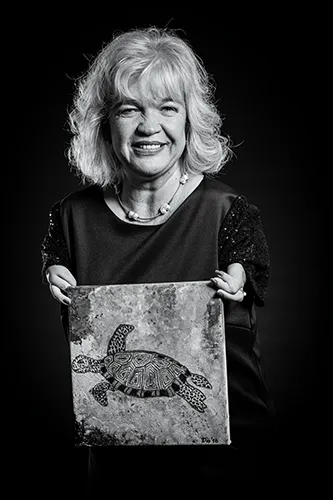
Bärbel Drohmann
born March 19, 1962
„Ich bin mit zehn Wasserschildkröten getaucht. Das sind so tolle Momente in meinem Leben, an denen ich festmache: Das Leben ist lebenswert.“
Glücksmomente …
Natürlich die Geburt meiner Kinder. Die Zwillinge und auch mein Einzelkind kamen mit Kaiserschnitt auf die Welt. Sie haben sie mir sofort an den Kopf gelegt. Ich konnte Küsschen geben und sie sehen – das war ein total belebendes Gefühl.
Und dann habe ich mir immer gewünscht, mit Delfinen zu schwimmen. Diesen Wunsch habe ich mir auf Curaçao erfüllt. Ich bin mit einem Therapie-Delfin geschwommen. Am Ende war das Vertrauen derartig groß, dass ich auf dem Rücken schwamm, der Delfin neben mir ebenfalls auf dem Rücken schwamm und er seine Flosse in meine Hand gelegt hat. Das war auch einer der glücklichsten Momente in meinem Leben.
Ein anderer Glücksmoment war auf Curaçao: Dort bin ich mit zehn Wasserschildkröten getaucht. Das war einfach wunder‑, wunderschön. Das sind so tolle Momente in meinem Leben, an denen ich festmache: Das Leben ist lebenswert.
Traurige Momente …
Ich hatte ein schweres Burn-out, weil ich mich in meinem Beruf sehr übernommen hatte. Und das war überhaupt nicht schön – mit Kindern drumherum, die eine tieftraurige Mutter ohne Energie und Lebenswillen erleben mussten.
Das möchte ich nicht noch mal erleben. Das hat mir sehr wehgetan. Und ich glaube, den Kindern auch. Ich war Lehrerin am Gymnasium und habe viele Jahre auf einer vollen Stelle gearbeitet, um die Familie finanziell zu stützen.
Mein Mann war zu Hause, hat die Kinder großgezogen, hat unser Haus gebaut, und ich bin immer arbeiten gegangen. Ich hatte dann einen Leistungskurs im Fach Mathematik, was mir sehr viel Spaß gemacht hat. Aber in der Summe war es einfach zu viel.
Träume und Wünsche …
Die Pension spielt eine große Rolle. Ich habe noch Psychologie studiert und dort auch einen Abschluss gemacht. Ich möchte gerne ein Studium im Alter machen und wieder in die Psychologie einsteigen. Ich bin, glaube ich, in der Diagnostik ziemlich gut, habe damals jedenfalls viel Erfolg damit gehabt, und da würde ich gerne wieder mit anfangen. Das kann mir vielleicht wieder Spaß machen.
Außerdem habe ich mich in die Arbeit mit geflüchteten Menschen vertieft. Ich helfe bei der Wohnungssuche, bei Fragen zum Aufenthalt, begleite sie bei Besuchen im Ausländeramt, kümmere mich um schulische Probleme der mitgebrachten Kinder und vieles mehr. Die Leute sind unglaublich dankbar. Das macht richtig viel Spaß.
“I once went diving with ten turtles. Those are some of the most wonderful moments of my life, and they make me realise that life is worth living.”
Moments of happiness …
The birth of my children, of course. The twins and my only child were all born by caesarean section. They placed them on my chest straight away. I was able to give them little kisses and look at them – it was a truly invigorating feeling.
And then I’d always wanted to swim with dolphins. I fulfilled that wish in Curaçao. I swam with a therapy dolphin. By the end, the bond of trust was so strong that I was swimming on my back, the dolphin was swimming on its back beside me, and it placed its fin in my hand. That was also one of the happiest moments of my life.
Another moment of happiness was in Curaçao: there, I went diving with ten sea turtles. It was simply wonderful, absolutely wonderful. These are such amazing moments in my life that make me realise: life is worth living.
Sad moments …
I suffered from severe burnout because I had taken on too much at work. It was no fun at all, especially when I had children around me who had to see their mother deeply sad, with no energy or will to live.I wouldn’t want to go through that again. It hurt me deeply. And I think it hurt the children too. I was a secondary school teacher and worked full-time for many years to support the family financially.
My husband stayed at home, brought up the children, built our house, whilst I always went to work. I then taught an advanced maths course, which I really enjoyed. But all in all, it was simply too much.
Dreams and aspirations …
My pension plays a major role. I studied psychology and graduated with a degree in the subject. I’d like to return to university later in life to study psychology again. I think I’m quite good at diagnostics – I certainly had a lot of success with it back then – and I’d like to get back into that. I might enjoy it again.
I’ve also become deeply involved in working with refugees. I help them find accommodation, answer questions about their residence status, accompany them on visits to the immigration office, sort out any school-related issues for the children they’ve brought with them, and much more. People are incredibly grateful. It’s really enjoyable.
“Mergulhei com dez tartarugas aquáticas. São momentos tão incríveis na minha vida que me fazem perceber: vale a pena viver.”
Momentos de felicidade…
Claro, o nascimento dos meus filhos. Os gêmeos e também meu filho único vieram ao mundo por cesariana. Eles os colocaram na minha cabeça imediatamente. Pude dar beijinhos e vê-los – foi uma sensação totalmente revigorante.
E então, sempre desejei nadar com golfinhos. Realizei esse desejo em Curaçao. Nadei com um golfinho de terapia. No final, a confiança era tão grande que eu nadei de costas, o golfinho ao meu lado também nadou de costas e colocou sua barbatana na minha mão. Esse também foi um dos momentos mais felizes da minha vida.
Outro momento de felicidade foi em Curaçao: lá, mergulhei com dez tartarugas marinhas. Foi simplesmente maravilhoso, maravilhoso. São momentos tão incríveis na minha vida que me fazem perceber: vale a pena viver.
Momentos tristes…
Passei por um grave esgotamento profissional porque me sobrecarreguei demais no trabalho. E isso não foi nada bom — com as crianças por perto, que tiveram que conviver com uma mãe profundamente triste, sem energia e sem vontade de viver.
Não quero passar por isso de novo. Isso me machucou muito. E acredito que às crianças também. Eu era professora no ensino médio e trabalhei por muitos anos em tempo integral para sustentar financeiramente a família.
Meu marido ficava em casa, criava as crianças, construiu nossa casa, e eu sempre saía para trabalhar. Eu dava aulas de matemática avançada, o que me dava muito prazer. Mas, no fim das contas, era simplesmente demais.
Sonhos e desejos…
A aposentadoria tem um papel importante. Eu também estudei psicologia e me formei nessa área. Gostaria de fazer um curso superior na terceira idade e voltar a me dedicar à psicologia. Acho que sou bastante boa em diagnósticos; pelo menos, tive muito sucesso com isso naquela época, e gostaria de recomeçar por aí. Talvez isso possa me trazer prazer novamente.
Além disso, me dediquei ao trabalho com refugiados. Ajudo na busca por moradia, em questões relacionadas à permanência no país, acompanho-os em visitas ao Departamento de Imigração, cuido dos problemas escolares das crianças que vieram com eles e muito mais. As pessoas são incrivelmente gratas. Isso é muito gratificante.
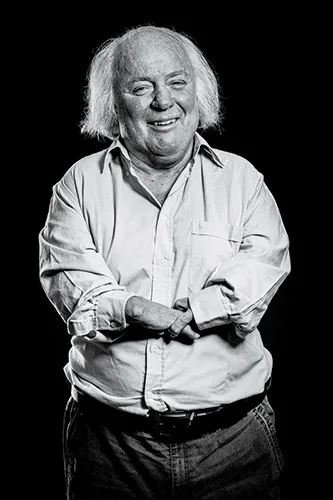
Kalli Hinsch
born April 12, 1962
Glücksmomente …
Eine Familie zu haben, eine Familie gegründet zu haben, eine Familie gefunden zu haben, die zu mir hält, das sind schöne Sachen. Jetzt bin ich sogar Opa geworden. Familie ist für mich Glück.
Meine Mutter war immer auf meiner Seite. Als es in die Schule ging, hat der Direktor gesagt: „Nein, Ihr Sohn muss in die Sonderschule.“ Und meine Mutter hat auf seinen Schreibtisch gehauen. Und sie hat gesagt: „Mein Sohn hat das zwar mit den Armen, aber nicht mit dem Kopf.“ Und ich habe es geschafft – mit Dickköpfigkeit.
Auch meine Verwandtschaft hat mitgeholfen. Meine Schwester hat von Anfang an auf meiner Seite gestanden. Bis hin zu meiner jetzigen Familie: meiner Frau, meinen Kindern – und jetzt meinem Enkelkind. Das macht mich sehr stolz.
Traurige Momente …
Traurig zu sein, fängt für mich damit an, als ich kapiert habe, wie man aufwächst mit Contergan, mit den Einschränkungen. Noch viel schlimmer war das, was man als Versuchskaninchen mitgemacht hat. Ich nenne mich Versuchskaninchen – wie viele von uns, an denen herumgeschnippelt wurde, um zum Beispiel die Arme zu verlängern. Das Weinen eines Kindes wurde nicht akzeptiert. Die Ärzte und Schwestern haben gesagt: „Stell dich nicht so an, sonst wird es noch schlimmer.“
Diese Qualen, die uns früher zugefügt wurden, das waren die schlimmsten Momente. Die hätten gar nicht nötig getan. Ich bin eingesperrt worden im Krankenhaus. Wenn Mama und Papa mich besuchen wollten, wurde die Tür aufgesperrt, aber hinter ihnen wieder zugeschlossen. Da habe ich mich gefragt: Als was behandelt man dich hier? Als ein Stück Vieh? Einerseits hat man sich gesagt, damit musst du dich abfinden, eine Behinderung zu haben, auf der anderen Seite behandelt man dich wie das Letzte. Ich habe als Kind schon gespürt, dass da was mit mir gemacht wird, was nicht richtig ist.
Mein Opa und meine Mutter haben mich aus dem Krankenhaus herausgeholt, ohne Genehmigung, weil sie mein Weinen durch die Schmerzen nicht mehr ertragen konnten.
Meine Mutter stand immer auf meiner Seite, bis zuletzt. Sie ist erst kürzlich verstorben. Sie hatte doll Demenz. Während der Demenzzeit hat sich ihr Mitleid mir gegenüber verschlimmert. Sie hat immer wieder gesagt: „Es tut mir leid. Es tut mir leid.“
Träume und Wünsche …
Ich träume von einer Hinterbliebenenversorgung, damit die Menschen, die sich für uns aufgeopfert haben und ihre Arbeit aufgegeben haben, entsprechend belohnt werden. Meine Frau hat aufgehört zu arbeiten, aber es gibt viele andere, die sich intensiv um uns kümmern. Wenn wir nicht mehr da sind, müssen sie weiterleben können, ohne in Armut zu versinken.
Mein Wunsch ist es, dass der familiäre Zusammenhalt aufrechterhalten bleibt und noch stärker wird. Mein Sohn ist auf Mallorca, meine Tochter in Stralsund, die andere Tochter ist nicht weit weg. Aber trotzdem leben alle weit auseinander.
Ich freue mich auf die Aufgabe beim Bundesverband Contergangeschädigter, mit dem Team dort zusammenzuarbeiten. Ich bin gewillt, in der Samtgemeinde als Behindertenbeauftragter zu fungieren, um mich den behinderten Menschen widmen zu können.
“Even as a child, I sensed that something was being done to me that wasn’t right.”
Moments of happiness …
Having a family, having started a family, having found a family that stands by me – these are wonderful things. Now I’ve even become a grandad. For me, family is happiness.
My mom was always on my side. When it came to starting school, the headteacher said, ‘No, your son has to go to a special school.’ And my mom banged her fist on his desk. She said, ‘My son may have a problem with his arms, but not with his head.’ And I managed it – through sheer stubbornness.
My relatives helped out too. My sister stood by me right from the start. to the Same goes for my current family: my wife, my children – and now my grandchild. That makes me very proud.
Sad moments …
For me, feeling sad began when I realised what it was like to grow up with thalidomide, with all the limitations it brings. Even worse was what we went through as guinea pigs. I call myself a guinea pig – like so many of us who were cut and sliced up, for example, to lengthen our arms. A child’s crying wasn’t tolerated. The doctors and nurses would say: ‘Don’t make such a fuss, or it’ll only get worse.’
Those torments inflicted on us back then – those were the worst moments. They really weren’t necessary at all. I was locked up in hospital. When mom and dad wanted to visit me, the door was unlocked, but locked again behind them. That’s when I asked myself: what are they treating you like here? Like a piece of livestock? On the one hand, they told you to just accept having a disability; on the other, they treated you like the lowest of the low. Even as a child, I sensed that something was being done to me that wasn’t right.
My grandad and my mom took me out of hospital without permission because they couldn’t bear hearing me cry out in pain any longer.
My mom was always on my side, right until the end. She passed away only recently. She had severe dementia. As her dementia progressed, her sympathy for me grew even stronger. She kept saying: ‘I’m sorry. I’m sorry.’
Dreams and wishes …
I dream of a survivors’ pension, so that the people who have sacrificed themselves for us and given up their jobs are rewarded accordingly. My wife has stopped working, but there are many others who look after us devotedly. When we are gone, they must be able to carry on with their lives without falling into poverty.
My wish is that family ties remain strong and grow even stronger. My son is in Mallorca, my daughter in Stralsund, and my other daughter lives nearby. But even so, we all live far apart.
I am looking forward to taking on the role at the Federal Association of Thalidomide Victims and working with the team there. I am willing to serve as the disability officer in the joint municipality so that I can devote myself to supporting people with disabilities.
“Já quando era criança, sentia que estavam fazendo algo comigo que não estava certo.”
Momentos de felicidade…
Ter uma família, ter constituído uma família, ter encontrado uma família que está ao meu lado – essas são coisas lindas. Agora, até me tornei avô. Para mim, família é felicidade.
Minha mãe sempre esteve do meu lado. Quando chegou a hora de ir para a escola, o diretor disse: “Não, seu filho precisa ir para a escola especial.” E minha mãe bateu na mesa dele. E disse: “Meu filho tem esse problema nos braços, mas não na cabeça.” E eu consegui – com teimosia.
Minha família também esteve ao meu lado e me ajudou muito. Minha irmã esteve comigo desde o primeiro momento, sempre ao meu lado. E esse apoio me acompanha até hoje, na minha família que construí: minha esposa, meus filhos – e agora, também, meu neto. Olhar para tudo isso me enche de orgulho e gratidão.
Momentos tristes…
Para mim, a tristeza começou quando percebi como é crescer com o Thalidomida, com todas essas limitações. Pior ainda foi o que passamos como cobaias. Eu me considero uma cobaia – assim como muitos de nós, que fomos submetidos a cirurgias, por exemplo, para alongar os braços. O choro de uma criança não era aceito. Os médicos e as enfermeiras diziam: “Não faça tanto alarde, senão vai ficar ainda pior.”
Essas torturas que nos infligiram antigamente foram os piores momentos. Não havia necessidade alguma disso. Fui trancado no hospital. Quando mamãe e papai queriam me visitar, a porta era destrancada, mas trancada novamente assim que eles saíam. Aí eu me perguntava: como é que te tratam aqui? Como um animal? Por um lado, diziam que eu tinha que me conformar com o fato de ter uma deficiência; por outro, me tratavam como se eu não valesse nada. Já quando criança, eu sentia que estavam fazendo algo comigo que não era certo.
Meu avô e minha mãe me tiraram do hospital, sem autorização, porque não aguentavam mais meu choro por causa das dores.
Minha mãe sempre esteve do meu lado, até o fim. Ela faleceu recentemente. Ela sofria de demência grave. Durante o período da demência, a compaixão dela por mim se intensificou. Ela repetia sem parar: “Sinto muito. Sinto muito.”
Sonhos e desejos…
Sonho com um plano de previdência para os familiares, para que as pessoas que se sacrificaram por nós e abandonaram seus empregos sejam devidamente recompensadas. Minha esposa deixou de trabalhar, mas há muitas outras pessoas que cuidam intensamente de nós. Quando não estivermos mais aqui, elas precisam poder continuar vivendo sem cair na pobreza.
Meu desejo é que a coesão familiar seja mantida e se torne ainda mais forte. Meu filho está em Maiorca, minha filha em Stralsund, a outra filha não está muito longe. Mas, mesmo assim, todos moram bem distantes uns dos outros.
Estou animado com a função na Associação Federal das Vítimas do Thalidomida e com a oportunidade de trabalhar com a equipe de lá. Estou disposto a atuar como representante das pessoas com deficiência no município, para poder me dedicar a elas.
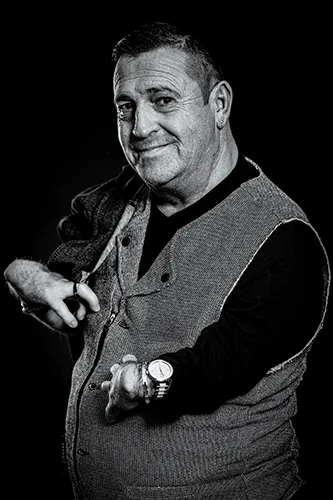
Urban Meyer
born May 25, 1961
„Was früher ganz schlimm war, war, dass man beim Orthopäden Schienen bekam. Nachts wurde dann an den Stellschräubchen gedreht. Dann hat meine Mutter angefangen zu weinen, ich habe angefangen zu weinen. Meine Mutter hat die Schienen noch zu Hause. Alle.“
Glücksmomente …
Ein Highlight ist natürlich, als ich eingeschult wurde. Damals wusste man nicht, ob ich in eine Sonderschule gehen werde oder in eine normale Schule. Ich bin in einen normalen Kindergarten gegangen. Und als meine Mutter mit mir zum Rektor ging, um zu gucken, auf welche Schule ich gehen kann, da hat der Rektor der normalen Volksschule gesagt: „Gib dem Kind einen Stift.“ Zur Zeit meiner Einschulung 1967 wurde noch auf der Schiefertafel geschrieben. Ich habe auf die Schiefertafel ein Häuschen gemalt. Und da hat der Rektor gesagt: „Der geht hier in die Schule.“
Seitdem bin ich so durch das ganze Leben gegangen. Das heißt, ich habe früher Handball gespielt. An der Schule für Körperbehinderte in Rhöndorf war ich dann zwei Jahre und habe danach eine Banklehre gemacht. 2005 bin ich wegen der Schmerzen in Rente gegangen.
Ich habe einen Theaterverein gegründet, bei dem ich seit über 30 Jahren Vorsitzender bin. Ich spiele selbst Theater, Volkstheater. Davor habe ich jahrelang im Karneval eine Büttenrede gehalten.
Und natürlich, was mich auch glücklich macht: Ich habe drei Freunde, die ich seit dem Kindergarten kenne, also seit über 57 Jahren. Wir sind immer noch sehr gut befreundet – wie früher. Das ist eine richtige Freundschaft, das ist wirklich sehr schön.
Traurige Momente …
Was früher ganz schlimm war, war, dass man beim Orthopäden Schienen bekam. Nachts wurde dann an den Stellschräubchen gedreht. Dann hat meine Mutter angefangen zu weinen, ich habe angefangen zu weinen. Meine Mutter hat sie noch zu Hause. Alle.
Zum Orthopäden gehe ich nur in Ausnahmefällen. Einmal war ich wegen eines leichten Bandscheibenvorfalls da und es war ein Vertretungsarzt anwesend. Das MRT-Bild von meinem Rücken hing am Röntgenschirm und er sagte: „Oh, gucken Sie mal hier. Hier ist noch einer von den Wenigen, die noch am Leben sind. Gucken Sie sich mal den Rücken an! Den drucke ich mir mal aus und zeige den auch den anderen angehenden Ärzten.“ Dann drehte er sich um und ging. Ich war so perplex. Ich konnte nichts mehr sagen.
Der nächste Orthopäde in einer anderen Stadt, bei dem ich danach war, kommt herein: „Oh, ein Contergan. Meine Mutter hat die Tabletten auch auf dem Tisch gehabt. Gott sei Dank hat sie nichts genommen. Wie viel Rente kriegen Sie?“
Oder: Ich hatte mir mal den Arm gebrochen. Dann bin ich ins Krankenhaus. Da schwingt der Arzt den Arm und sagt: „Der Arm ist doch so krumm, da braucht man doch nix mehr zu gipsen.“ Seit dem Tag gehe ich zu keinem Orthopäden mehr.
Träume und Wünsche …
Ich wünsche mir, dass meine Familie, sprich meine Mutter und meine Schwester mit Anhang, und natürlich auch meine Frau und mein Enkelchen gesund bleibt und dass ich noch lange glücklich und gesund mit ihnen zusammenleben kann. Und dass ich mein Leben so weiterführen kann, solange es geht.
Happy moments …
One highlight, of course, was when I started school. Back then, no one knew whether I’d be going to a special school or a mainstream school. I went to a mainstream nursery. And when my mom took me to see the headteacher to find out which school I could go to, the headteacher of the mainstream primary school said: ‘Give the child a pen.’ When I started school in 1967, we were still writing on slate boards. I drew a little house on the slate board. And the headteacher said: ‘He’ll be attending school here.’
I’ve carried on like that throughout my whole life. That is to say, I used to play handball. Then I spent two years at a school for children with physical disabilities in Rhöndorf and afterwards completed a banking apprenticeship. In 2005, I retired because of the pain.
I founded a theatre society, and I’ve been its chairman for 30 or 31 years. I act myself – in folk theatre. Before that, I gave carnival speech for years.
Of course, there’s something else that makes me happy. I have three friends that I’ve known since nursery school — for over 57 years! We’re still very close — just like we used to be. That’s a true friendship, and it’s wonderful.
Sad moments …
What used to be really awful was when you’d get splints from the orthopaedic surgeon. Then, at night, they’d turn the adjustment screws. My mom would start crying, and I’d start crying too. My mom still has the splints at home. All of them I only see the orthopaedic surgeon in exceptional cases. Once I was there because of a minor slipped disc and there was a locum doctor present. The MRI scan of my back was displayed on the X‑ray screen and he said: “Oh, have a look at this. Here’s another one of the few who are still alive. Have a look at his back! I’ll print this out and show it to the other trainee doctors as well.” Then he turned round and left. I was completely taken aback. I couldn’t say a word.
The next orthopaedic surgeon I saw, in another town, walked in and said: “Oh, a thalidomide survivor. My mom had those tablets on her table too. Thank goodness she didn’t take any. How much pension do you get?”
Then there was the time I broke my arm. So I went to hospital. The doctor swung my arm around and said: “The arm’s so crooked, there’s no need to put it in a plaster cast.” I haven’t seen an orthopaedic surgeon since that day.
Dreams and wishes …
I hope that my family – that is, my mother and my sister and her family, and of course my wife and my little grandson – stay healthy. I hope that I can continue to live happily and healthily with them for a long time to come. And I hope that I can carry on living my life this way for as long as possible.
“O que era muito ruim antigamente era quando a gente recebia talas do ortopedista. À noite, então, apertavam os parafusinhos de ajuste. Aí minha mãe começava a chorar, e eu também. Minha mãe ainda guarda as talas em casa. Todas.”
Momentos de felicidade…
Um dos momentos mais marcantes, é claro, foi quando comecei a frequentar a escola. Naquela época, não se sabia se eu iria para uma escola especial ou para uma escola regular. Eu frequentei um jardim de infância regular. E quando minha mãe foi comigo até o diretor para ver em qual escola eu poderia estudar, o diretor da escola primária regular disse: “Dê uma caneta para a criança.” Na época em que comecei a frequentar a escola, em 1967, ainda se escrevia no quadro de ardósia. Desenhei uma casinha no quadro de ardósia. E então o diretor disse: “Ele vai estudar aqui.”
Desde então, tenho vivido minha vida assim. Ou seja, eu jogava handebol antigamente. Fiquei dois anos na escola para pessoas com deficiência física em Rhöndorf e, depois disso, fiz um estágio em um banco. Em 2005, me aposentei por causa das dores.
Fundei uma associação de teatro, da qual sou presidente há 30 ou 31 anos. Eu mesmo faço teatro, teatro popular. Antes disso, por muitos anos, fiz discursos de carnaval.
E, claro, o que também me deixa feliz: tenho três amigos que conheço desde o jardim de infância, ou seja, há mais de 57 anos. Continuamos sendo muito amigos – como antigamente. Essa é uma amizade de verdade, é realmente muito bonita.
Momentos tristes…
O que era muito ruim antigamente era quando a gente recebia talas no ortopedista. À noite, então, giravam os parafusinhos de ajuste. Aí minha mãe começava a chorar, e eu também. Minha mãe ainda as guarda em casa. Todas.
Só vou ao ortopedista em casos excepcionais. Certa vez, fui lá por causa de uma leve hérnia de disco e havia um médico substituto no consultório. A imagem da ressonância magnética das minhas costas estava exibida na tela de raios‑X e ele disse: “Ah, olhe só aqui. Aqui está mais um dos poucos que ainda estão vivos. Dê uma olhada nas costas! Vou imprimir isso e mostrar também para os outros futuros médicos.” Então ele se virou e saiu. Fiquei tão perplexa. Não consegui dizer mais nada.
O ortopedista seguinte, em outra cidade, a quem consultei depois, entrou e disse: “Ah, um caso de Thalidomida. Minha mãe também tinha esses comprimidos na mesa. Graças a Deus ela não tomou nada. Quanto você recebe de aposentadoria?”
Ou: uma vez, eu quebrei o braço. Fui para o hospital. Lá, o médico balançou meu braço e disse: “O braço está tão torto que nem precisa mais colocar gesso.” Desde aquele dia, não vou mais a nenhum ortopedista.
Sonhos e desejos…
Desejo que minha família — ou seja, minha mãe e minha irmã com seus familiares, e, claro, também minha esposa e meu netinho — continue com boa saúde e que eu possa continuar vivendo feliz e saudável ao lado deles por muito tempo ainda. E que eu possa continuar levando minha vida assim, enquanto for possível.
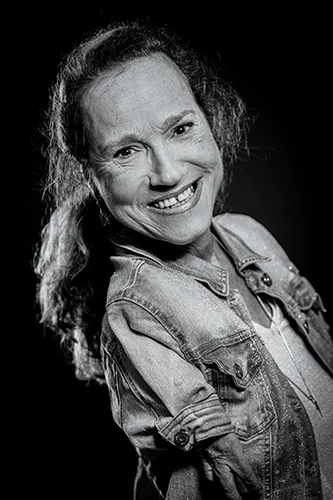
Sofia Plich
born June 21, 1962
„Wie lange habe ich mir den Kopf tätscheln lassen müssen? Ich hatte und habe ja auch eine bequeme Größe, so hat man vermieden, mir die Hand zu geben. Dieses Auf-den-Kopf-Getätschel fand ich immer furchtbar und auch respektlos, das hat sich als Kind für mich schon falsch angefühlt.“
Glücksmomente …
Ich habe privat eine klassische Gesangsausbildung gemacht – nicht professionell, aber schon bei einer klassischen Gesangslehrerin. Früher wurden behinderte Menschen nirgendwo angenommen.
Wenn ich singe, schreibe oder schauspielere, geht es mir gut. Bei „Sommerblut“ – einem Theaterfestival in Köln – habe ich schon mehrfach mitgewirkt. Bei solchen Gelegenheiten fühle ich mich lebendig! In der Kölner Philharmonie habe ich ein Solo vor 800 Leuten gesungen. Das Thema war Contergan. Vielleicht kann ich auf der Bühne oder vor der Kamera etwas ausleben, was ich sonst nicht mache.
Ich habe auch schon mal Comedy im Fernsehen gemacht, mit versteckter Kamera. Da konnte ich ein bisschen was für mich lernen, einfach mal Leute um Hilfe zu bitten. Um Hilfe zu bitten, mache ich nicht gerne. Ich habe gelernt, möglichst alles selbst zu machen und unauffällig zu sein. Aber: Ich liebe das Leben – meistens jedenfalls!
Traurige Momente …
Wie lange habe ich mir den Kopf tätscheln lassen müssen? Ich hatte und habe ja eine bequeme Größe, so hat man vermieden, mir die Hand zu geben. Dieses Auf-den-Kopf-Getätschel fand ich immer furchtbar und auch respektlos, das hat sich als Kind für mich schon falsch angefühlt. Wie lange habe ich mir Dreiwortsätze anhören müssen, nach dem Motto: Mehr kapiert sie nicht. Und natürlich auch so was wie: „Dich hätte man früher vergast!“ Manche Leute beurteilen andere Menschen einfach so, ohne erst einmal alles – in dem Falle mich – auf sich zukommen zu lassen. Es ist immer dieser defizitäre Blick. Warum ist ein vermeintlich normaler Mensch „besser“ als ich? Wenn jeder Mensch für sich gesehen würde und nicht sofort immer das Vergleichen anfangen würde, wäre vieles einfacher.
Ein bisschen Demut täte gut. Es könnte so schön sein. Ein bisschen mehr Liebe, also Liebe im weitesten und engeren Sinne. Mehr Miteinander als Gegeneinander. Einfach mal gucken. Offen sein. Und nicht gleich mit Aggression und Ellbogen raus: höher, schneller, weiter … Das will ich gar nicht, das Tempo, das ist nicht meins. Dass die Menschen mal wieder ein bisschen menschlicher werden, das fände ich schön. Sie sollten nicht vergessen, dass man die letzte Reise allein und mit Nichts antritt. Also lieber jetzt „Live in Peace“ als am Ende „Rest in Peace“.
Träume und Wünsche …
Ich wünsche mir, dass ich mir meiner selbst sicherer wäre. Wenn ich neue Menschen kennenlerne oder in einer größeren Gruppe bin, fühle ich mich nicht wohl. Ich mag nicht mehr das Gefühl haben, erst beweisen zu müssen, dass ich „normal“ bin – dass man ganz „normal“ mit mir reden kann und ich das – oh Wunder – auch verstehe. Ich will nichts mehr beweisen müssen. Ich möchte so sein, wie ich nun mal bin.
Und wenn ich dann noch einmal das Glück hätte, jemanden zu lieben und geliebt zu werden … Und wenn ich mal nur einen einzigen Tag ohne Schmerzen haben könnte.
“How long did I have to put up with people patting me on the head? I was – and still am – quite a large person, so people avoided shaking my hand. I always found this patting on the head dreadful and disrespectful; even as a child, it felt wrong to me.”
Moments of happiness …
I took private classical singing lessons with a teacher, but not professionally. In the past, people with disabilities weren’t accepted anywhere.When I sing, write or act, I feel good. I’ve taken part in ‘Sommerblut’ – a theatre festival in Cologne – several times. On occasions like that, I feel alive! I sang a solo in front of 800 people at the Cologne Philharmonic Hall. The theme was thalidomide. Perhaps when I’m on stage or in front of the camera, I can express things that I wouldn’t otherwise.
I’ve also done comedy on television before, with a hidden camera. That taught me a little something about myself – simply asking people for help. I don’t like asking for help. I’ve learnt to do as much as possible myself and to keep a low profile. But: I love life – most of the time, anyway!
Sad moments …
How long did I have to put up with people patting me on the head? I was – and still am – a bit on the large side, so people avoided shaking my hand. I always found this patting on the head awful and disrespectful; even as a child, it felt wrong. How long did I have to listen to three-word sentences along the lines of: ‘That’s all she understands.’ And, of course, things like: ‘They’d have gassed you off in the old days!’ Some people simply judge others like that, without first letting everything – in this case, me – come to them. It’s always that deficit-oriented view. Why is a supposedly ‘normal’ person ‘better’ than me? If people were seen for who they are, rather than people immediately starting to make comparisons, so much would be easier.
A bit of humility would do us good. It could be so lovely. A bit more love – love in both the broadest and narrowest senses. More togetherness than opposition. Just taking a look. Being open-minded. And not immediately resorting to aggression and elbowing your way through: higher, faster, further… I don’t want that at all; that pace isn’t for me. I’d love it if people became a bit more human again. They shouldn’t forget that you set out on your final journey alone and with nothing. So better ‘Live in Peace’ now than ‘Rest in Peace’ at the end.
Dreams and wishes …
I wish I could be more confident. When I meet new people or find myself in a large group, I don’t feel at ease. I don’t want to feel as though I have to prove that I’m ‘normal’ – that people can talk to me in a normal way and that, amazingly, I can understand them. I don’t want to have to prove anything anymore. I just want to be myself.And if I were ever lucky enough to love someone and be loved in return … And if I could just have a single day without pain.
“Por quanto tempo tive que aturar que me acariciassem a cabeça? Eu tinha — e ainda tenho — um tamanho considerável, então evitavam me dar a mão. Sempre achei essa carícia na cabeça horrível e também desrespeitosa; já quando criança, isso me parecia errado.”
Momentos de felicidade…
Fiz um curso particular de canto clássico – não profissionalmente, mas com uma professora de canto clássico. Antigamente, pessoas com deficiência não eram aceitas em lugar nenhum.
Quando canto, escrevo ou atuo, me sinto bem. No “Sommerblut” – um festival de teatro em Colônia – já participei várias vezes. Nessas ocasiões, me sinto viva! Na Filarmônica de Colônia, cantei um solo para 800 pessoas. O tema era o Thalidomida. Talvez eu consiga expressar no palco ou diante das câmeras algo que, de outra forma, não faria.
Já fiz comédia na TV também, com câmera escondida. Lá, aprendi um pouco sobre mim mesma: simplesmente pedir ajuda às pessoas. Não gosto de pedir ajuda. Aprendi a fazer tudo sozinha, na medida do possível, e a passar despercebida. Mas: eu amo a vida – na maioria das vezes, pelo menos!
Momentos tristes…
Por quanto tempo tive que aturar que me acariciassem a cabeça? Eu tinha — e ainda tenho — um tamanho avantajado, então evitavam me dar a mão. Sempre achei esse gesto de acariciar a cabeça horrível e também desrespeitoso; já quando criança, isso me parecia errado. Por quanto tempo tive que ouvir frases de três palavras, do tipo: “Mais do que isso ela não entende”. E, claro, coisas do tipo: “Antigamente, teriam te gaseado!” Algumas pessoas julgam os outros simplesmente assim, sem antes deixar que tudo – nesse caso, eu – se revele por si só. É sempre esse olhar que vê apenas as deficiências. Por que uma pessoa supostamente normal é “melhor” do que eu? Se cada pessoa fosse vista por si só e não começássemos imediatamente a fazer comparações, muitas coisas seriam mais fáceis.
Um pouco de humildade faria bem. Poderia ser tão bom. Um pouco mais de amor, ou seja, amor no sentido mais amplo e mais restrito. Mais união do que divisão. Simplesmente observar. Estar aberto. E não partir logo com agressividade e cotoveladas: mais alto, mais rápido, mais longe… Eu não quero isso, esse ritmo, não é o meu. Que as pessoas voltassem a ser um pouco mais humanas, eu acharia isso lindo. Elas não deveriam esquecer que a última jornada é feita sozinho e sem nada. Então, melhor agora “Live in Peace” do que no final “Rest in Peace”.
Sonhos e desejos…
Eu gostaria de ter mais confiança em mim mesma. Quando conheço pessoas novas ou estou em um grupo maior, não me sinto à vontade. Não quero mais ter a sensação de precisar provar que sou “normal” — que as pessoas podem falar comigo de maneira totalmente “normal” e que eu, — mesmo que ninguém acredite — também entendo isso. Não quero mais ter que provar nada. Quero ser do jeito que sou.
E se eu tivesse a sorte de amar alguém e ser amada… E se eu pudesse passar pelo menos um único dia sem dor.
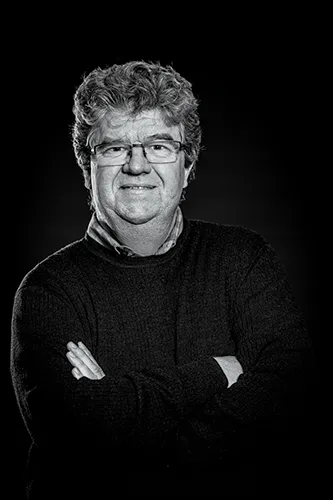
Christian Schara
born April 18, 1962
„Ich habe tageweise im Krankenhaus verbracht, ohne meine Mama, und hatte keine Kommunikation und wusste nicht, was mit mir passiert. Das war das Schlimmste für mich.“
Glücksmomente …
Ich habe eine tolle Familie. Ich habe zwei Töchter, eine leibliche und eine Stieftochter. Ich habe vier Geschwister. Sie sind immer für mich da. Meine Eltern auch. Ich fühle mich so, als würde ich auf einem sicheren Boden stehen.
Dass ich mein Studium geschafft habe, darauf bin ich sehr stolz. Ich habe Elektrotechnik mit Schwerpunkt Automatisierung und Elektromedizin studiert. Ich war der einzige Gehörlose an meiner Uni und mir wurde kein Dolmetscher bereitgestellt. Ich habe es trotzdem geschafft. Da bin ich sehr, sehr stolz drauf. Ich war dann in der Qualitätssicherung, erst in der Elektrotechnik und zum Schluss im Finanzierungsbereich.
Traurige Momente …
Hart war für mich die Krankenhauszeit als Kind. Ich habe nie verstanden, warum ich ins Krankenhaus musste. Die Kommunikation hat nie geklappt.
Da war ein Fischaquarium, davon war ich fasziniert. Die Krankenschwestern haben versucht, mich mit dem Aquarium abzulenken, um meine Mama aus dem Raum schicken zu können. Ich habe mich dann umgedreht und meine Mama war verschwunden. Ich habe tageweise im Krankenhaus verbracht, ohne meine Mama, hatte keine Kommunikation und wusste nicht, was mit mir passiert. Wenn ich von meiner Mutter eine Zahnbürste gekriegt habe, wusste ich, dass sie abends wiederkommt, weil sie die Zahnbürste ja braucht.
Das Zweite, weswegen ich traurig bin, ist die Kommunikation im ganzen Leben. Auch im Studium. Meine Geschwister sind alle studierte Leute und ich wollte dem Niveau immer standhalten, aber es war für mich nicht möglich und ist es bis heute nicht. Die Kommunikationsbarriere ist immer da und ich musste alles allein für mich erkämpfen. Es gab und gibt bis heute teilweise keine Zuschüsse für Dolmetscher. Ich möchte, dass Gehörlose auf dem gleichen Level sind wie hörende Menschen. Das diskriminiert mich.
Träume und Wünsche …
Es ist für uns Contergan-hörgeschädigte Menschen schwer, mit hörenden Menschen Kontakt aufzunehmen. Die nicht hörgeschädigten Contergan-Betroffenen haben Wege der Kommunikation und weniger Barrieren.
Es gibt etwa 2.700 Contergan-Betroffene und ungefähr 300 davon sind hörgeschädigt. Ich wünsche mir, dass gehörlose Menschen das gleiche Level haben. Infos, die über E‑Mail verschickt werden, sind nicht in Leichter Sprache.
Ich wünsche mir, dass der Conterganverband einen Topf für Dolmetscher zur Verfügung stellt, sodass wir zu allem einen Zugang haben, zum Beispiel zu Kino und Theater. Meine Tochter spielt im Theater mit. Ich gehe hin, und es gibt keinen, der die Dolmetscherkosten übernimmt. Das ist mein Ziel Nummer eins.
Und das Zweite, was ich mir wünsche, ist, dass es in dem Conterganverband einen Mitarbeiter mit Sozialdiplom und Gebärdensprachkompetenz gibt. Die Gebärdensprachkompetenz und das Einfühlungsvermögen müssen vorhanden sein. Die Gehörlosen kämpfen, kämpfen, kämpfen. Aber da ist keiner, der sich in uns hineinfühlen kann und sich in dem Bereich auskennt.
Moments of happiness …
I have a wonderful family. I have two daughters, one biological and one stepdaughter. I have four siblings. They’re always there for me. My parents are too. I feel as though I’m standing on solid ground.
I’m very proud that I completed my degree. I studied electrical engineering, specialising in automation and electromedicine. I was the only deaf student at my university and I wasn’t provided with an interpreter. I managed it anyway. I’m very, very proud of that. I then worked in quality assurance, first in electrical engineering and finally in finance.
Sad moments …
My time in the hospital as a child was tough for me. I never understood why I had to be there. There was a lot miscommunication. .
There was a fish tank there, and I was fascinated by it. The nurses tried to distract me with the fish tank so they could send my mom out of the room. When I turned round and my mom had disappeared. I spent days in hospital without my mom, with no one to talk to, and had no idea what was happening to me. When my mom gave me a toothbrush, I knew my mom would be back in the evening because she needed it, of course.
The second thing that makes me sad is the lack of communication throughout my whole life. Even at university. My siblings are all university graduates, and I always wanted to keep up with them, but it wasn’t possible for me then and it still isn’t today. The communication barrier is always there, and I’ve had to fight for everything on my own. There were – and in some cases still are – no subsidies for interpreters. I want deaf people to be on the same level as hearing people. This discriminates against me.
Dreams and wishes …
As people with hearing impairments caused by thalidomide, it is difficult for us to make contact with hearing people. Thalidomide survivors without hearing impairments have more ways to communicate and face fewer barriers.
There are around 2,700 thalidomide survivors, and approximately 300 of them have hearing impairments. I would like to see deaf people treated equally. Information sent by email is not in easy-to-read language.
I would like the Thalidomide Association to set up a fund for interpreters, so that we have access to things like the cinema and theatre. My daughter acts in the theatre. I go to see her, but there is no one to cover the interpreting costs. That is my number one goal.
And the second thing I’d like to see is for the Thalidomide Association to have a staff members with diplomas in social work and sign language skills. They must have sign language skills and empathy. Deaf people struggle, struggle, struggle. But there’s no one who can empathise with us and who knows this field inside out.
“Passei dias no hospital, sem minha mãe, sem poder me comunicar com ninguém e sem saber o que estava acontecendo comigo. Isso foi o pior para mim.”
Momentos de felicidade…
Tenho uma família maravilhosa. Tenho duas filhas, uma biológica e uma enteada. Tenho quatro irmãos. Eles estão sempre ao meu lado. Meus pais também. Sinto como se estivesse em terreno seguro.
Tenho muito orgulho de ter concluído meus estudos. Estudei Engenharia Elétrica com ênfase em Automação e Eletromedicina. Eu era o único surdo na minha universidade e não me foi fornecido nenhum intérprete. Mesmo assim, consegui. Tenho muito, muito orgulho disso. Trabalhei depois na área de garantia de qualidade, primeiro em Engenharia Elétrica e, por fim, na área financeira.
Momentos tristes…
A época em que fiquei no hospital quando era criança foi difícil para mim. Nunca entendi por que precisei ir para o hospital. A comunicação nunca funcionou.
Havia um aquário de peixes que me fascinava. As enfermeiras tentavam me distrair com o aquário para poderem mandar minha mãe sair do quarto. Então, quando me virei, minha mãe tinha sumido. Passei dias no hospital, sem minha mãe, sem poder me comunicar e sem saber o que estava acontecendo comigo. Quando minha mãe me dava uma escova de dentes, eu sabia que ela voltaria à noite, porque ela precisava da escova.
A segunda coisa que me deixa triste é a comunicação ao longo de toda a minha vida. Também na faculdade. Meus irmãos são todos graduados e eu sempre quis estar à altura desse nível, mas isso não foi possível para mim e continua não sendo até hoje. A barreira da comunicação está sempre presente e tive que lutar sozinho por tudo. Não havia — e, em alguns casos, ainda não há — subsídios para intérpretes. Quero que as pessoas surdas estejam no mesmo nível que as pessoas ouvintes. Isso me discrimina.
Sonhos e desejos…
Para nós, pessoas com deficiência auditiva causadas pelo Thalidomida, é difícil estabelecer contato com pessoas sem deficiência auditiva. As pessoas afetadas pelo Thalidomida que não têm deficiência auditiva dispõem de meios de comunicação e enfrentam menos barreiras.
Existem cerca de 2.700 pessoas afetadas pelo Thalidomida, das quais aproximadamente 300 têm deficiência auditiva. Eu gostaria que as pessoas surdas tivessem o mesmo nível de acesso. As informações enviadas por e‑mail não estão em linguagem simplificada.
Gostaria que a Associação do Thalidomida disponibilizasse um fundo para intérpretes, para que tenhamos acesso a tudo, por exemplo, ao cinema e ao teatro. Minha filha atua no teatro. Eu vou assistir, mas não há ninguém que cubra os custos do intérprete. Esse é o meu objetivo número um.
E a segunda coisa que desejo é que haja, na Associação Thalidomida, um funcionário com formação em serviço social e competência em língua de sinais. É preciso que haja competência em língua de sinais e empatia. As pessoas surdas lutam, lutam, lutam. Mas não há ninguém que consiga se colocar no nosso lugar e que entenda dessa área.
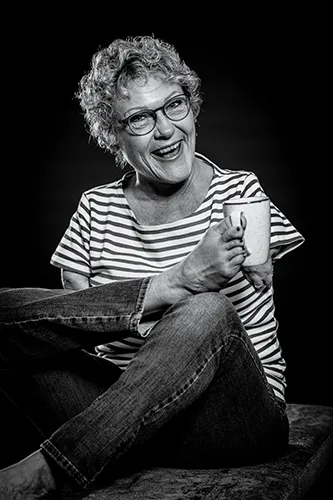
Konny Schmitt
„Die meisten Tiefpunkte werden quasi durch andere Menschen ausgelöst. Gesetzgeber, Behörden, Menschen denken einfach überhaupt nicht darüber nach, welche Möglichkeiten uns genommen wurden aufgrund unserer körperlichen Einschränkungen.“
Glücksmomente …
Das Schönste und Wichtigste in meinem Leben war die Geburt meiner Tochter im Jahr 1986.
Ich bin froh, dass meine Eltern meine Eltern waren. Meine Eltern haben mich nie versteckt, sie haben mich auch nicht besonders angezogen, damit man die kurzen Arme nicht sieht. Ich war eine Hausgeburt, der Arzt und die Hebamme haben, Gott sei Dank, ganz natürlich reagiert. Es wird ein Kind geboren und ja, es hat keine Arme. Sie haben mich direkt meiner Mutter in die Arme gegeben und nichts versteckt. Meine Mutter sagte: „So, dich muss ich doppelt so liebhaben.“
Ich bin sehr dankbar, dass ich zwei relativ gesunde Beine habe. Sie haben es mir ermöglicht, meine Arme zu ersetzen. Einen Großteil meines Lebens konnte ich bis heute selbstständig gestalten.
Traurige Momente …
Bevor ich in die Schule kam, musste ich für ein halbes Jahr in eine Klinik nach Münster. Das Schlimmste für mich war, weg von zu Hause, weg von meinen Eltern zu sein, raus aus meiner vertrauten Umgebung. Besuchszeit war ausschließlich sonntags von 14 bis 16 Uhr. Wir Kinder drückten uns die Nasen an der Glasscheibe platt und warteten ungeduldig, bis die Stationsschwester um Punkt 14 Uhr die große Glastür aufschloss. Zwei Stunden Besuchszeit einmal in der Woche … Kinder haben ein völlig anderes Zeitempfinden, und so hat es eine Ewigkeit gedauert, bis der nächste Sonntag da war.
Gefühlt wurde ich jeden Tag in die Werkstatt geschickt und da wurden Gipsabdrücke von meinen Armen gemacht. Unzählige Gipsabdrücke! Ich kann mich daran erinnern, dass meine Arme fast in Fetzen hingen, zumindest war die Haut ziemlich wund. Ich sollte wohl Armschienen bekommen, wurde dann aber nach einem halben Jahr ohne Schiene entlassen. Ich denke, wir waren alle nur Versuchskaninchen. Gegen Prothesen hatte ich mich von Anfang an gewehrt, die waren damals noch viel zu schwer und hätten mich zusätzlich behindert, anstatt mir zu helfen. Die Klinikzeit war ein tiefer Tiefpunkt!
Wir erleben mehr Tiefpunkte in unserem Leben als unversehrte Menschen. Die meisten werden durch andere ausgelöst. Gesetzgeber, Behörden, Menschen denken nicht darüber nach, welche Möglichkeiten uns genommen wurden aufgrund unserer körperlichen Einschränkungen.
Träume und Wünsche …
Jeder hat Träume und Wünsche, aber meine unterscheiden sich sicher von denen nicht beeinträchtigter Menschen. Für die nahe Zukunft wünsche ich mir sehr, dass alle, die Verantwortung für die Contergan-Katastrophe tragen – die Firma Grünenthal, die Bundesregierung, die Conterganstiftung – noch einmal eine ordentliche Schippe drauflegen! Damit meine ich klar: finanzielle Mittel!
Der Wunsch aller Contergan-Opfer ist ganz sicher, menschenwürdig und selbstbestimmt leben zu können, bis es eben zu Ende ist. Ich wünsche mir, für das, was ich für ein selbstbestimmtes Leben benötige, nie wieder einen Antrag stellen zu müssen, egal bei welcher Behörde. Ich bin das Gefühl „der Bettelei“ nie losgeworden.
“Most of the low points are, so to speak, caused by other people. Lawmakers, authorities – people simply don’t give a second thought to the opportunities we’ve been denied because of our physical limitations.”
Moments of happiness …
The most wonderful and important thing in my life was the birth of my daughter in 1986.
I’m glad that my parents were my parents. My parents never hid me away, nor did they dress me in a particular way to conceal my short arms. I was born at home; thankfully, the doctor and the midwife reacted quite naturally. A child is born and, yes, it has no arms. They placed me straight into my mother’s arms and didn’t hide anything. My mum said, ‘Well then, I’ll have to love you twice as much.’
I’m very grateful that I have two relatively healthy legs. They’ve enabled me to make up for my arms. I’ve been able to live independently for most of my life, right up to the present day.
Sad moments …
Before I started school, I had to spend half a year in a clinic in Münster. The worst thing for me was being away from home, away from my parents, out of my familiar surroundings. Visiting hours were only on Sundays from 2 pm to 4 pm. We children would press our noses flat against the glass and wait impatiently until the ward nurse unlocked the large glass door at 2 pm sharp. Two hours’ visiting time once a week … Children have a completely different sense of time, so it felt like an eternity before the next Sunday arrived.
It felt as though I was sent to the workshop every day, where plaster casts were taken of my arms. Countless plaster casts! I can remember that my arms were in a terrible state; at the very least, the skin was quite sore. I was supposed to be fitted with arm splints but was then discharged after half a year without any. I think we were all just guinea pigs. I’d resisted prosthetics from the very start; back then they were still far too heavy and would have hindered me further rather than helping me. My time in hospital was an absolute low point!
We experience more low points in our lives than able-bodied people do. Most of them are caused by others. Lawmakers, authorities and people don’t stop to think about the opportunities we’ve been deprived of because of our physical limitations.
Dreams and wishes …
Everyone has dreams and wishes, but mine are certainly different from those of people who are not affected. For the near future, I very much hope that all those responsible for the thalidomide disaster – Grünenthal, the German Government and the Thalidomide Foundation – will really step up their game! By that I clearly mean financial support!
The wish of all thalidomide victims is undoubtedly to be able to live with dignity and self-determination until the very end. I hope that I will never again have to apply – to any authority whatsoever – for what I need to lead a self-determined life. I have never been able to shake off the feeling of ‘begging’.
“A maioria dos momentos difíceis é, de certa forma, provocada por outras pessoas. Legisladores, autoridades, as pessoas simplesmente não pensam nem um pouco nas oportunidades que nos foram tiradas por causa de nossas limitações físicas.”
Momentos de felicidade…
O que de mais bonito e importante aconteceu na minha vida foi o nascimento da minha filha, em 1986.
Estou feliz por ter tido meus pais como pais. Meus pais nunca me esconderam, nem me vestiram de maneira especial para que não se vissem meus braços curtos. Nasci em casa; o médico e a parteira, graças a Deus, reagiram com total naturalidade. Nasceu uma criança e, sim, ela não tem braços. Eles me colocaram diretamente nos braços da minha mãe e não esconderam nada. Minha mãe disse: “Bem, agora vou ter que te amar o dobro.”
Sou muito grata por ter duas pernas relativamente saudáveis. Elas me permitiram substituir meus braços. Consegui levar grande parte da minha vida de forma autônoma até hoje.
Momentos tristes…
Antes de entrar na escola, tive que passar meio ano em uma clínica em Münster. O pior para mim foi ficar longe de casa, longe dos meus pais, fora do meu ambiente familiar. O horário de visita era exclusivamente aos domingos, das 14h às 16h. Nós, crianças, colávamos o nariz no vidro e esperávamos impacientes até que a enfermeira da enfermaria destrancasse a grande porta de vidro pontualmente às 14h. Duas horas de visita uma vez por semana… As crianças têm uma percepção do tempo totalmente diferente, e por isso parecia uma eternidade até chegar o próximo domingo.
Parecia que eu era mandado para a oficina todos os dias, onde faziam moldes de gesso dos meus braços. Inúmeros moldes de gesso! Lembro-me de que meus braços estavam quase em farrapos; pelo menos, a pele estava bastante ferida. Eu deveria receber talas para os braços, mas acabei recebendo alta, meio ano depois, sem nenhuma tala. Acho que éramos todos apenas cobaias. Desde o início, resisti às próteses; naquela época, elas ainda eram pesadíssimas e teriam me prejudicado ainda mais, em vez de me ajudar. O período na clínica foi um momento de grande desânimo!
Passamos por mais momentos difíceis na vida do que as pessoas sem deficiências. A maioria deles é causada por terceiros. Legisladores, órgãos públicos e as pessoas em geral não refletem sobre as oportunidades que nos foram tiradas devido às nossas limitações físicas.
Sonhos e desejos…
Todo mundo tem sonhos e desejos, mas os meus certamente diferem dos das pessoas sem deficiência. Para o futuro próximo, desejo muito que todos os responsáveis pela catástrofe do Thalidomida – a empresa Grünenthal, o governo federal, a Fundação Thalidomida – realmente se empenhem ainda mais! E com isso quero dizer claramente: recursos financeiros!
O desejo de todas as vítimas do Thalidomida é, sem dúvida, poder viver com dignidade e autonomia até o fim da vida. Desejo nunca mais ter que apresentar um pedido, seja a qual for a autoridade, para obter o que preciso para levar uma vida autônoma. Nunca consegui me livrar da sensação de “implorar”.
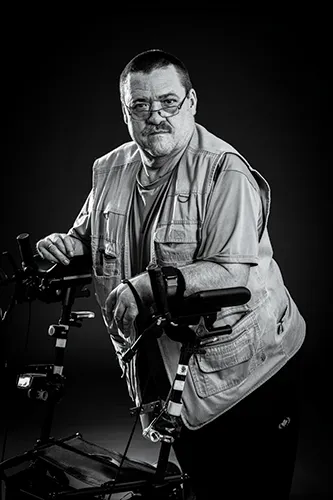
Frank Stens
born Febuary 3, 1962
„Ich habe bis einschließlich zu meinem vierten Lebensjahr tatsächlich auch mit dem Tode gerungen. Bis zum fünften Lebensjahr lag ich im Spreizgips. Meine Eltern haben in den ersten Lebensjahren wahnsinnig viel für mich getan und auch aufgegeben – und konnten vieles nicht machen.“
Glücksmomente …
Der glücklichste Moment war, als ich meine Frau kennengelernt habe. Warum? Ganz einfach: Natürlich der Liebe wegen. Meine Frau hat mich stark geprägt, denn ich wäre sonst wohl Alkoholiker geworden. Sie hat mein Leben mit dem Alkohol eine Zeit lang mitgemacht, aber irgendwann gesagt: „Du darfst dich jetzt entscheiden, der Alkohol oder ich?“ Dann habe ich mich für meine Frau entschieden. Das war vor über 24 Jahren.
Meine Eltern haben in den ersten Lebensjahren wahnsinnig viel für mich getan und auch aufgegeben – und konnten vieles nicht machen. Während der Kindergartenzeit, Schulzeit und Ausbildungszeit haben sie auf vieles verzichtet. Da bin ich meiner Mutter sehr, sehr dankbar.
Ursprünglich wollte ich nach der Schule Pferdewirt werden. Ich habe während meiner Schulzeit auf verschiedenen Gestüten gearbeitet, da gab es Kollegen, die mich ausgenutzt haben. Und dann bin ich an ein Gestüt geraten, da hatten wir alle untereinander ein schönes und enges Verhältnis. Der größte Vertrauensbeweis eines Besitzers war: Es gab eine Stute, die war kurz vor dem Abfohlen. Es sollte jemand da sein, und das war dann ich.
Traurige Momente …
Meine Mutter hat sich Zeit ihres Lebens Vorwürfe gemacht, dass sie dieses Medikament genommen hat, und ich habe es nie geschafft, ihr diese Vorwürfe zu nehmen. Ich habe bis einschließlich zu meinem vierten Lebensjahr mit dem Tode gerungen. Bis zum fünften Lebensjahr lag ich im Spreizgips.
Das Einzige, was ich meiner Mutter nie verziehen habe, ist, was in der Schule losgewesen ist. Diese zehn Jahre auf der Realschule haben mein Leben geprägt. Auf Anraten der Ärzte bin ich auf die normale Realschule gegangen, und da fing das ganze Theater an. Ich bin von vielen Schülern gemobbt worden, auch von Lehrern. Es gab nur einen Lehrer, der voll und ganz hinter mir gestanden hat. Ich habe sehr oft die Schule geschwänzt.
Was mich traurig stimmt, ist, dass zwei unserer contergangeschädigten Freunde von uns gegangen sind. Bei der Feier des 50-jährigen Bestehens unseres Vereins in Köln war einer der Ärzte dabei, die damals gesagt haben, wir Contergangeschädigten würden nicht älter als 20 Jahre werden. Und einer aus dem Vorstand hat dann das etwas obszöne Zeichen gemacht, und wir mussten alle lauthals lachen. Alle haben applaudiert, denn wir haben gezeigt, dass wir einen Lebenswillen haben.
Träume und Wünsche …
Im Grunde genommen habe ich keine Wünsche. Ich bin glücklich und zufrieden. Ich habe in die Familie meiner Frau eingeheiratet. Ich selbst habe keine Kinder. Aber meine Frau hat Kinder und Enkel, sie sagen alle Opa zu mir. Wir haben Anfang des Jahres eine Urenkelin bekommen. Das wäre mein größter Wunsch, dass sie alle glücklich und zufrieden sind. Und natürlich wünsche ich mir, dass wir lange, lange gesund bleiben.
Moments of happiness …
The happiest moment was when I met my wife. Why? Quite simply: because of love, of course. My wife has had a huge influence on me; otherwise, I probably would have become an alcoholic. She put up with my drinking for a while, but at some point, she said: ‘You have to choose now: alcohol or me?’ So I chose my wife. That was over 24 years ago.
My parents did so much for me in my early years and sacrificed a great deal – and there were many things they couldn’t do. During my time at nursery, school and in vocational training, they went without a lot. I’m very, very grateful to my mom for that.
Originally, I wanted to become a horse manager after leaving school. I worked at various stud farms whilst I was at school, and there were colleagues who took advantage of me. And then I ended up at a stud farm where we all had a lovely, close relationship with one another. The greatest proof of trust from an owner was this: there was a mare who was about to foal. Someone had to be there, and that turned out to be me.
Sad moments …
My mother spent her whole life blaming herself for taking that medicine, and I never managed to ease her guilt. I was fighting for my life right up until my fourth birthday. I was in a spreader cast until I was five.
The one thing I’ve never forgiven my mother for is what happened at school. Those ten years at secondary school shaped my life. On the doctor’s advice, I went to a mainstream secondary school, and that’s when all the trouble started. I was bullied by many pupils, and even by teachers. There was only one teacher who stood by me completely. I often played truant..
What makes me sad is that two of our friends affected by thalidomide have passed away. At the celebration marking our association’s 50th anniversary in Cologne, one of the doctors who had said back then that we, the thalidomide victims, wouldn’t live past the age of 20 was there. And one of the board members then made that slightly obscene gesture, and we all had to laugh out loud. Everyone applauded, because we’d shown that we had a will to live.
Dreams and wishes …
To be honest, I don’t really have any wishes. I’m happy and content. I married into my wife’s family. I don’t have any children of my own. But my wife has children and grandchildren, and they all call me ‘Grandad’. We welcomed a great-granddaughter at the start of the year. My greatest wish would be for them all to be happy and content. And, of course, I hope that we stay healthy for a long, long time.
“De fato, lutei contra a morte até os quatro anos de idade, inclusive. Até os cinco anos, fiquei com um gesso de abdução. Meus pais fizeram muito por mim nos primeiros anos de vida e também abriram mão de muitas coisas – e não puderam fazer muitas outras.”
Momentos de felicidade…
O momento mais feliz foi quando conheci minha esposa. Por quê? Muito simples: claro que por amor. Minha esposa teve uma grande influência na minha vida, pois, sem ela, eu provavelmente teria me tornado alcoólatra. Ela conviveu com o meu problema com o álcool por um tempo, mas, em determinado momento, disse: “Agora você tem que decidir: o álcool ou eu?” Então, optei pela minha esposa. Isso foi há mais de 24 anos.
Meus pais fizeram muito por mim nos primeiros anos de vida e também abriram mão de muitas coisas – e não puderam fazer outras. Durante o período do jardim de infância, da escola e da formação profissional, eles abriram mão de muitas coisas. Por isso, sou muito, muito grato à minha mãe.
Originalmente, eu queria me tornar um criador de cavalos depois da escola. Durante o período escolar, trabalhei em vários haras, onde havia colegas que se aproveitavam de mim. E então acabei indo para um haras onde todos nós tínhamos um relacionamento muito bom e próximo. A maior prova de confiança de um proprietário foi: havia uma égua que estava prestes a parir. Alguém precisava estar presente, e esse alguém acabei sendo eu.
Momentos tristes…
Minha mãe passou a vida inteira se culpando por ter tomado aquele remédio, e eu nunca consegui aliviar esse sentimento de culpa dela. Lutei contra a morte até os quatro anos de idade, inclusive. Até os cinco anos, fiquei com um gesso de abdução.
A única coisa que nunca perdoei à minha mãe foi o que aconteceu na escola. Esses dez anos no ensino fundamental marcaram minha vida. Seguindo a recomendação dos médicos, fui para uma escola regular, e foi aí que todo aquele drama começou. Sofri bullying de muitos alunos, inclusive de professores. Havia apenas um professor que me apoiou totalmente. Eu matava aula com muita frequência.
O que me deixa triste é que dois dos nossos amigos afetados pelo Thalidomida já se foram. Na comemoração dos 50 anos de nossa associação em Colônia, estava presente um dos médicos que, na época, havia dito que nós, vítimas do Thalidomida, não viveríamos mais do que 20 anos. E um membro da diretoria fez aquele gesto um tanto obsceno, e todos nós rimos às gargalhadas. Todos aplaudiram, porque mostramos que temos vontade de viver.
Sonhos e desejos…
Na verdade, não tenho desejos. Estou feliz e satisfeito. Entrei para a família da minha esposa. Eu não tenho filhos. Mas minha esposa tem filhos e netos, e todos me chamam de vovô. No início deste ano, ganhamos uma bisneta. Esse seria o meu maior desejo: que todos sejam felizes e estejam bem. E, claro, desejo que continuemos com saúde por muito, muito tempo.
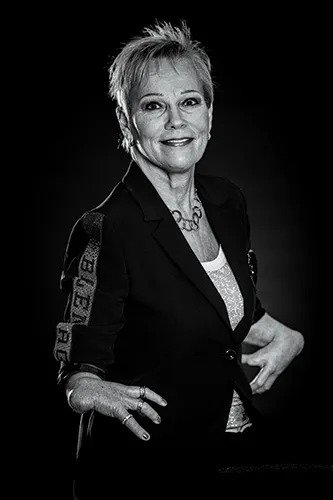
Beate Störmer-Smith
born January 3, 1961
„Ein Kind hat mal gesagt: ‚Deine Mama sieht aus wie ein Känguru.‘ Mein Sohn hat dann bitterlich geweint, aber ich habe ihm gesagt: ‚Ein Känguru ist doch süß.‘ Ich stehe da drüber.“
Glücksmomente …
Eigentlich habe ich immer glückliche Momente, weil ich immer positiv bin. Als meine Kinder eingeschult worden sind, habe ich mit der Lehrerin abgesprochen, dass ich mich selbst bei den Kindern vorstellen möchte, damit sie nicht lästern. Ein Kind hat mal gesagt: „Deine Mama sieht aus wie ein Känguru.“ Mein Sohn hat dann bitterlich geweint, aber ich habe ihm gesagt: „Ein Känguru ist doch süß.“ Ich stehe da drüber.
Ich bin also in der Schule gewesen und habe mich der Klasse vorgestellt. Ich habe gesagt: „Ich sehe vielleicht ein bisschen anders aus, als ihr denkt, und ihr habt bestimmt Fragen.“ Und dann wurden sie ganz locker. Sie fragten, ob ich Auto fahren kann, ob ich dieses und jenes kann. Ich habe alles erklärt und auch, wie es dazu gekommen ist. Kinder wollen einfach nur Antworten auf ihre Fragen.
Genauso mache ich das, wenn mich auf der Straße ein Kind anstarrt und die Mutter sagt: „Komm jetzt!“ Dann sage ich: „Kleinen Moment! Ihre Tochter ist nur neugierig. Ihre Tochter möchte nur wissen, warum ich so aussehe.“ Wenn jemand über meine Arme spricht, dann möchte ich offen darüber reden.
Kinder sind nun einmal wissbegierig. Es sind einfach nur diese offenen Fragen, die wir alle haben, und da muss man Kindern nicht gleich sagen: „Das erzähle ich dir nicht.“
Traurige Momente …
Schwierig war, dass ich eine Zwillingsschwester habe und die hat nicht ganz so viel von Contergan mitbekommen. Sie hat innerliche Schäden und etwas am Daumen. Optisch kann man ihr nicht ansehen, dass sie contergangeschädigt ist. Und dann, mit 15 oder 16, waren wir mit Jungs zugange. Das war dann schwer, wenn man in der Disco nicht aufgefordert wird zum Tanzen. Das fand ich schon hart. Dann habe ich die Jungs selbst aufgefordert, mit mir zu tanzen. Natürlich hat man auch ab und zu eine Niederlage einstecken müssen.
Ich hatte auch mal eine feste Beziehung, mit ihm war ich ungefähr ein dreiviertel Jahr oder ein Jahr zusammen. Ich bin mit einer Freundin in die Disco gegangen, einmal die Woche. Das gefiel ihm nicht. Er sagte: „Ja, Beate, ich muss ja schließlich schon deine Behinderung akzeptieren, dann möchte ich nicht, dass du auch noch irgendwie anderweitig in Discos rumtanzt.“ Und dann bin ich aufgestanden, habe ihn angeschaut und gesagt: „Ab heute brauchst du gar nichts mehr zu akzeptieren“ und bin gegangen. Klar, im Auto habe ich geweint, es tat mir total weh, und ich hatte den ja auch lieb. Aber ich war ein Realist. Da habe ich lieber ein bisschen gelitten, bin aber trotzdem meinen Weg weitergegangen.
Träume und Wünsche …
Ich hasse den Winter. Es fängt damit an, die blöden Schuhe anzuziehen. Die Jacke, die ich wieder nicht zukriege und bei der ich vielleicht im Wald jemanden fragen muss, ob er mir den Reißverschluss zumachen kann. Dafür gibt es immer noch keine vernünftigen Sachen.
Meine Schwiegermutter wohnt in Florida und jedes Mal, wenn ich da ankomme in Jacksonville, fühle ich mich sofort zu Hause. Unser Ziel ist, später auszuwandern, nicht ganz, weil wir einen sehr, sehr großen Bekannten- und Freundeskreis hier haben. Meine Staatsangehörigkeit als Deutsche würde ich nicht aufgeben. Da ich auch schon mal erkrankt bin, kann ich schnell wieder nach Deutschland fliegen.
Da ist der Wunsch, in Florida eine Immobilie zu kaufen oder auf dem Grundstück meiner Schwiegereltern zu bauen. Meine Tochter ist bereits nach Florida ausgewandert, sie hasst den Winter genauso wie ich.
“A child once said, ‘Your mom looks like a kangaroo.’ My son then cried his eyes out, but I told him, ‘A kangaroo is cute, isn’t it?’ I’m not bothered by it.”
Moments of happiness …
Actually, I always have happy moments because I’m always positive. When my children started school, I told the teacher that I’d like to introduce myself to the class, so they wouldn’t make fun of me. One child once said: ‘Your mom looks like a kangaroo.’ My son then cried his eyes out, but I told him: ‘A kangaroo is cute, isn’t it?’ I’m not bothered by that sort of thing.
So I went to the school and introduced myself to the class. I said, “I might look a bit different from what you’re used to, and I’m sure you’ve got questions.” And then they relaxed completely. They asked if I could drive a car, if I could do this or that. I explained everything, including how it all came about. Children just want answers to their questions.
That’s exactly what I do when a child stares at me in the street and their mom says, ‘Come on now!’ Then I say, ‘Just a moment! Your daughter’s just curious. She just wants to know why I look the way I do.’ When someone mentions my arms, I want to talk about it openly.
Children are naturally curious. They just ask those open-ended questions we all have, and you don’t have to tell children straight away, ‘I’m not going to tell you that.’
Sad moments …
What made it difficult was that I have a twin sister, and she wasn’t quite as badly affected by thalidomide. She has internal damage and a problem with her thumb. You can’t tell just by looking at her that she’s been affected by thalidomide. Then, when we were 15 or 16, we started getting involved with boys.It was tough when no one asked you to dance at the disco. I found that really hard. So, I ended up asking the boys myself. Of course, I took a few knocks along the way.
I was in a serious relationship once; I was with him for about nine months or a year. I used to go to the disco with a friend once a week. He didn’t like that. He said: “Well, Beate, I’ve already had to accept your disability, so I don’t want you going off dancing around in discos with other people as well.” So I stood up, looked at him and said, “From today on, you don’t have to accept anything at all,” and I left. Of course, I cried in the car – it hurt me deeply, after all I did love him. But I was a realist. I’d rather suffer a bit than give up on my own path.
Dreams and wishes …
I hate winter. It all starts with having to put on those stupid shoes. Then there’s the jacket – which I can’t manage to do up again, and which might mean I have to ask someone in the woods to zip it up for me. There still aren’t any decent clothes for that.
My mother-in-law lives in Florida and every time I arrive in Jacksonville, I immediately feel at home. Our goal is to emigrate there eventually – though not entirely, as we have a very, very large circle of acquaintances and friends here. I wouldn’t give up my German citizenship. As I’ve been ill before, I can fly back to Germany quickly if I need to.
I’d like to either buy a property in Florida or build on my in-laws’ land. My daughter has already moved to Florida; she hates winter just as much as I do.
“Uma criança disse uma vez: ‘Sua mãe parece um canguru’. Meu filho começou a chorar amargamente, mas eu disse a ele: ‘Um canguru é fofo, afinal’. Eu não levo isso a sério.”
Momentos de felicidade…
Na verdade, sempre tenho momentos de felicidade, porque sou sempre positiva. Quando meus filhos começaram a frequentar a escola, combinei com a professora que eu mesma gostaria de me apresentar às crianças, para que elas não fizessem comentários maliciosos. Uma criança disse uma vez: “Sua mãe parece um canguru.” Meu filho chorou amargamente, mas eu disse a ele: “Um canguru é fofo, afinal.” Eu não levo isso a sério.
Então, fui até a escola e me apresentei para a turma. Eu disse: “Talvez eu tenha uma aparência um pouco diferente do que vocês imaginam, e com certeza vocês têm perguntas.” E aí eles ficaram bem à vontade. Perguntaram se eu sei dirigir, se consigo fazer isso e aquilo. Expliquei tudo e também como isso aconteceu. As crianças só querem respostas para suas perguntas.
É exatamente assim que eu faço quando uma criança fica me olhando fixamente na rua e a mãe diz: “Vamos embora!” Então eu digo: “Um momentinho! Sua filha está apenas curiosa. Ela só quer saber por que eu tenho essa aparência.” Quando alguém fala sobre meus braços, eu quero conversar abertamente sobre isso.
Crianças são, por natureza, curiosas. São apenas essas perguntas abertas que todos nós temos, e não é preciso dizer logo para as crianças: “Isso eu não vou te contar.”
Momentos tristes…
O difícil era que eu tenho uma irmã gêmea e ela não foi tão afetada pelo Thalidomida. Ela tem danos internos e um problema no polegar. Visualmente, não dá para perceber que ela sofreu danos causados pelo Thalidomida. E então, aos 15 ou 16 anos, começamos a sair com garotos. Era difícil quando ninguém me convidava para dançar na boate. Eu achava isso bem chato. Então, eu mesma convidava os garotos para dançar comigo. É claro que, de vez em quando, eu também tinha que engolir uma rejeição.
Eu também já tive um relacionamento sério; fiquei com ele por cerca de nove meses a um ano. Eu ia à discoteca com uma amiga, uma vez por semana. Ele não gostava disso. Ele dizia: “É, Beate, afinal eu já tenho que aceitar a sua deficiência, então não quero que você fique dançando com outros caras nas discotecas.” Então me levantei, olhei para ele e disse: “A partir de hoje, você não precisa mais aceitar nada” e fui embora. Claro, no carro eu chorei, doeu muito, e eu também gostava dele. Mas eu era realista. Preferi sofrer um pouco, mas mesmo assim segui meu caminho.
Sonhos e desejos…
Eu odeio o inverno. Tudo começa com ter que calçar aqueles sapatos chatos. A jaqueta que, mais uma vez, não consigo fechar e que talvez me obrigue a pedir a alguém na floresta para me ajudar a fechar o zíper. Ainda não existem roupas decentes para isso.
Minha sogra mora na Flórida e, toda vez que chego lá em Jacksonville, me sinto imediatamente em casa. Nosso objetivo é emigrar mais tarde, mas não totalmente, porque temos um círculo muito, muito grande de conhecidos e amigos aqui. Eu não abriria mão da minha nacionalidade alemã. Como já fiquei doente antes, posso voltar rapidamente para a Alemanha.
Existe o desejo de comprar um imóvel na Flórida ou construir no terreno dos meus sogros. Minha filha já se mudou para a Flórida; ela odeia o inverno tanto quanto eu.
Joe Trebes
born August 22, 1961
„Wenn du jung bist und versuchst Beziehungen aufzubauen und du kriegst eine Abfuhr nach der anderen. Und du siehst bei den Kollegen, jeder hat alle paar Wochen eine neue Freundin und du hast keine. Das ist schon schwierig. Dann spielst du schon mit den schlimmsten Gedanken.“
Glücksmomente …
Ganz glücklich war ich, als ich meine Frau das erste Mal gesehen bzw. das erste Mal am Telefon gehört habe. Und als ich ihr den Heiratsantrag in Dubai gemacht habe und wir geheiratet haben. Geheiratet haben wir bei uns im Frankenwald, im Freien – auf einer Wiese mit einem Pavillon für die beiden Pfarrer. Während der kirchlichen Hochzeitsfeier saß eine Biene auf dem Hochzeitsstrauß meiner Braut. Einfach klasse und wunderschön.
Glücklich war ich auch, als ich den Führerschein bestanden habe und das Abitur gemacht habe.
Oder wenn man von der Firma weggeht und niemand traut einem was zu. Man fängt bei einer anderen Firma an und arbeitet sich hoch bis zur Geschäftsleiterebene. Ich glaube, es gibt noch viel mehr Glücksmomente, weil ich eigentlich ein positiver oder lebensbejahender Mensch bin.
Traurige Momente …
Meine Frau und ich wollten unbedingt im Freien heiraten – gegen den erbitterten Kampf der katholischen Kirche. Sie wollten das nicht, weil meine Frau evangelisch ist und ich katholisch bin. Ich fürchte, ich habe mich nie richtig aufgehoben gefühlt in der Kirche.
Das hat sicher auch mit meinen frühen Erfahrungen zu tun. Ich bin ja in Bamberg geboren und nach drei Tagen erhielt ich dort die Nottaufe. Meine Mutter hat mir gesagt, dass ich ihr erst am dritten Tag gezeigt wurde. Sie dachten, dass ich abnippele.
Schwierig waren für mich später auch die Erfahrungen mit Beziehungen. Wenn du jung bist und versuchst, Beziehungen aufzubauen, und du kriegst eine Abfuhr nach der anderen. Und du siehst bei den Kollegen, jeder hat alle paar Wochen eine neue Freundin, und du hast keine. Dann spielst du schon mit den schlimmsten Gedanken. Da stehe ich auch dazu. Aber zum Glück habe ich es nicht gemacht.
Irgendwann habe ich für mich etwas ganz Wichtiges erkannt: Wenn du noch so tief unten stehst, es geht irgendwo immer wieder nach oben. Das ist die Quintessenz, die ich auch vielen jungen Leuten mitgeben möchte: Du kannst weit herunterfallen, irgendwann bist du ganz unten, und dann geht’s nur noch nach oben. Du musst nur einmal öfter aufstehen, als du hinfällst.
Dabei hat mir ein ganz einfacher Satz geholfen. Ich habe damals im Büro eine Abkürzung auf einen Zettel geschrieben: TSWSSVH, das heißt: Tun Sie, was Sie sich vorgenommen haben. Und wenn du das jeden Tag siehst, hilft das.
Träume und Wünsche …
Einer meiner Träume ist das Sammeln von Oldtimern. Ich habe fünf Oldtimer, darunter eine schwarze Corvette. Eine Halle möchte ich noch bauen, damit die Autos ordentlich drinstehen.
Ansonsten ist Reisen ganz, ganz wichtig. Wenn wir reisen, dann möglichst zu zweit und ohne Gruppe, dann lernt man in den anderen Ländern auch die Leute kennen. Wir haben heute noch Kontakt zu Leuten aus Myanmar. Wir sind in zwei Wochen zu einer Hochzeit in Namibia eingeladen.
Und ich möchte noch den Bundesverband voranbringen. Ich bin Vermögensverwalter geworden, und so bin ich wie die Jungfrau zum Kind gekommen.
Moments of happiness …
I was absolutely delighted when I first saw my wife – or rather, when I first heard her voice on the phone. And when I organised our wedding in Dubai and we got married. We got married back home in the Frankenwald, outdoors – in a meadow with a gazebo for the two priests. During the church wedding ceremony, a bee landed on my bride’s bouquet. It was simply brilliant and beautiful.
I was also happy when I passed my driving test and got my A‑levels.
Another example is when you leave a company and nobody thinks you’re capable of anything. You start at another company and work your way up to the management level. I think there are many more moments of happiness, because I’m actually a positive, life-affirming person.
Sad moments …
Despite fierce opposition from the Catholic Church, my wife and I were determined to get married outdoors.. They didn’t want that because my wife is Protestant and I am Catholic. I’m afraid I’ve never really felt at home in the church.
That certainly has something to do with my early experiences. I was born in Bamberg, and three days later I was given an emergency baptism there. My mother told me that I wasn’t even shown to her until the third day. They thought I was on the verge of dying.
My experiences with relationships were also difficult for me later on. When you’re young and trying to build relationships, and you get one rejection after another. And you see your friends getting girlfriends –every few weeks, while you have none. Then you start entertaining the worst thoughts. I stand by that too. But thankfully, I didn’t go through with it.
At some point, I realised something very important for myself: no matter how low you’ve fallen, there’s always a way back up. That’s the essence of it, and it’s what I’d like to pass on to many young people: You can fall far, and you’ll hit rock bottom at some point. Then, the only way is up.You just have to get up one more time than you fall down.
One very simple phrase helped me with that. Back then, I wrote an acronym on a piece of paper in my office: TSWSSVH, which stands for: Do what you’ve set out to do. And when you see that every day, it helps.
Dreams and wishes …
One of my dreams is to collect classic cars. I currently own five, including a black Corvette. I’d still like to build a garage to properly store the cars inside.Otherwise, travelling is very, very important. When we travel, we try to go as a couple and without a group, as that way you get to know the local people in other countries. We’re still in touch with people from Myanmar today. We’ve been invited to a wedding in Namibia in two weeks’ time.
I’d also like to help advance the Federal Association. I became an asset manager by chance, which is how I ended up in this role.
Momentos de felicidade…
Fiquei muito feliz quando vi minha esposa pela primeira vez, ou melhor, quando a ouvi pela primeira vez ao telefone. E quando pedi a mão dela em Dubai e nós nos casamos. Nós nos casamos na região do Frankenwald, onde morávamos, ao ar livre – em um campo, com um um pavilhão para os dois pastores. Durante a cerimônia religiosa, uma abelha pousou no buquê de casamento da minha noiva. Simplesmente maravilhoso e lindo.
Também fiquei feliz quando tirei a carteira de motorista e concluí o ensino médio.
Ou quando você sai de uma empresa e ninguém acredita que você seja capaz de nada. Você começa em outra empresa e vai subindo até chegar ao cargo de gerente. Acho que há muito mais momentos de felicidade, porque, na verdade, sou uma pessoa positiva e que valoriza a vida.
Momentos tristes…
Minha esposa e eu queríamos muito nos casar ao ar livre – apesar da resistência acirrada da Igreja Católica. Eles não queriam isso porque minha esposa é luterana e eu sou católico. Receio nunca ter me sentido realmente à vontade na Igreja.
Isso certamente também tem a ver com minhas experiências de infância. Nasci em Bamberg e, três dias depois, recebi lá o batismo de emergência. Minha mãe me contou que só me trouxeram para ela no terceiro dia. Achavam que eu ia bater as botas.
Mais tarde, as experiências com relacionamentos também foram difíceis para mim. Quando você é jovem e tenta construir relacionamentos, e recebe uma rejeição atrás da outra. E você vê que, entre os colegas, todo mundo tem uma namorada nova a cada poucas semanas, e você não tem nenhuma. Aí você já começa a ter os piores pensamentos. Eu também admito isso. Mas, felizmente, não fiz nada disso.
Em algum momento, percebi algo muito importante para mim: por mais baixo que você esteja, sempre há um caminho para subir. Essa é a essência que também gostaria de transmitir a muitos jovens: você pode cair bem baixo, em algum momento chega ao fundo do poço, e a partir daí só há caminho para cima. Você só precisa se levantar uma vez a mais do que cai.
Nesse processo, uma frase bem simples me ajudou. Naquela época, escrevi uma sigla em um pedaço de papel no escritório: FOQVSPAF, que significa: Faça o que você se propôs a fazer. E quando você vê isso todos os dias, isso ajuda.
Sonhos e desejos…
Um dos meus sonhos é colecionar carros antigos. Tenho cinco carros antigos, incluindo um Corvette preto. Gostaria ainda de construir um galpão para que os carros fiquem bem guardados lá dentro.
Além disso, viajar é muito, muito importante. Quando viajamos, de preferência a dois e sem grupo, assim a gente conhece as pessoas dos outros países. Ainda mantemos contato com pessoas de Mianmar. Daqui a duas semanas, fomos convidados para um casamento na Namíbia.
E ainda quero impulsionar a Associação Federal. Tornei-me gestor de patrimônio e, assim, acabei entrando nessa área por acaso.
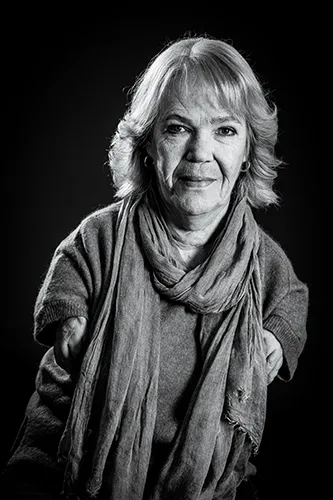
Bianca Vogel-Schmidt
born febuary 24, 1961
„Meine Mutter hat mit ihrer offenen und lebendigen Art sozusagen in den 1960er-Jahren Inklusion schon vorgelebt, ohne es gewusst zu haben.“
Glücksmomente …
Der glücklichste Moment in meinem Leben war, als ich die erste Weltmeisterin im Para-Dressur-Sport überhaupt wurde. Ich hatte nicht den Anspruch zu gewinnen, doch auf einmal ist mir dies gelungen. Dieses Ereignis hat mein Leben komplett verändert. Mein Weg führte immer mehr in Richtung professioneller Leistungssport. Seit meinem zehnten Lebensjahr saß ich auf dem Pferd. Ich komme aus dem Nichtbehinderten-Sport und das Schöne war, sowohl gegen Nichtbehinderte zu starten als auch gegen Behinderte. Da war ich Pionierin. Durch viele Showprogramme konnten wir den Para-Dressur-Sport mehr in den Mittelpunkt bringen.
Pionierarbeit zu leisten, zog sich auch durch mein berufliches Leben. Als Erzieherin habe ich über 30 Jahre in einem Regelkindergarten gearbeitet. Das große Glück war, dass ich in Köln am Krieler Dom einen Ausbildungsplatz erhalten habe. Dies war zur damaligen Zeit unvorstellbar. Ich war glücklich über die Chance, meinen Traumberuf zu erlangen. Auch hier war ich eine Pionierin, denn danach öffnete sich diese Schule für Menschen mit Handicap. Irgendwie habe ich mit Energie, Freude, aber auch mit Frustration Pionierarbeit geleistet und konnte für Menschen mit körperlichen Einschränkungen etwas erreichen.
Traurige Momente …
Der traurigste Moment war, als ich meine Mutter verloren habe. Wir hatten ein sehr gutes Verhältnis. Meine Mutter war eine feine und forsche Frau. Sie war trotzdem ein sehr sensibler Mensch. Ihr Lebensmotto war: „Kind, es muss weitergehen!“ Meine Mutter hat mich zu dem gemacht, was ich heute bin. Sie hat sich nicht unterkriegen lassen. Für sie war es selbstverständlich, dass ich in einen normalen Kindergarten gegangen bin. Mit ihrer offenen und lebendigen Art hat sie in den 1960er-Jahren Inklusion vorgelebt, ohne es zu wissen. Das war sehr mutig.
Sie hat auf uns Kinder geschaut, sie hat uns auch geführt, aber sie hat uns auch in eine Selbstständigkeit gehen lassen, und das war großartig. Sie war eine tolle Frau, eine wunderbare Mutter.
Nach meiner Geburt wurde ich nicht in ihre Arme gelegt, nein, man hat ihr ohne Gefühl direkt mitgeteilt: „Sie haben eine Missgeburt.“ Sie hat darum gekämpft, mich zu sehen, und als ich endlich in ihren Armen lag, hat sie mir später oft erzählt, dass mein Lächeln das Wichtigste für sie war. Kurz vor ihrem Tod nahm sie meine Hand und sagte: „Du bist das Wichtigste in meinem Leben.“
Träume und Wünsche …
Eigentlich habe ich alles erreicht. Natürlich möchte ich noch leben. Ich möchte noch die Welt kennenlernen, wenn es möglich ist. Ich möchte meine Selbstständigkeit so gut wie möglich erhalten, jedoch spürt man in kleinen Schritten, dass die körperliche Beweglichkeit eingeschränkter wird und die Schmerzen zunehmen.
Das Allerwichtigste für mich ist jetzt, mit meinem liebenswerten und zuverlässigen Lebenspartner gemeinsame Wünsche und Träume umzusetzen, zu erleben und zu gestalten, denn wir leben nur einmal.
“With her open and lively nature, my mother was, so to speak, already practising inclusion back in the 1960s, without even realising it.”
Moments of happiness …
The happiest moment of my life was becoming the first-ever women’s world champion in para-dressage. I hadn’t set out to win, but suddenly I’d managed it. That event completely changed my life. My path led me increasingly towards professional competitive sport. I’ve been riding horses since I was ten. I come from the world of able-bodied sport, and the beauty of it was competing against both able-bodied and disabled riders. I was a pioneer in that respect. Through numerous show programmes, we were able to bring para-dressage more into the spotlight.
Pioneering work has also been a recurring theme throughout my professional life. As a nursery teacher, I worked in a mainstream nursery for over 30 years. I was incredibly lucky to secure a training place at the Krieler Dom in Cologne. At the time, this was unimaginable.
Sad moments …
The saddest moment was when I lost my mother. We had a very close relationship. My mother was a gentle yet spirited woman. She was, nevertheless, a very sensitive person. Her motto in life was: ‘My child, life must go on!’ My mother made me the person I am today. She never let anything get her down. For her, it went without saying that I should go to a mainstream nursery. With her open and lively nature, she exemplified inclusion back in the 1960s without even realising it. That was very brave.
She looked after us children; she guided us, but she also let us develop our independence, and that was brilliant. She was a fantastic woman, a wonderful mother.
After I was born, I wasn’t placed in her arms; no, they told her bluntly and without compassion: ‘You’ve had a stillbirth.’ She fought to see me, and when I was finally in her arms, she often told me later that my smile was the most important thing to her. Shortly before she died, she took my hand and said: ‘You are the most important thing in my life.’
Dreams and wishes …
Actually, I’ve achieved everything. Of course, I still want to live. I’d like to explore the world, if possible. I want to maintain my independence as much as possible, but I’m gradually noticing that my physical mobility is becoming more limited and the pain is increasing.The most important thing for me now is realising, experiencing and shaping our shared dreams and aspirations with my lovely, reliable partner, because life is short.
“Minha mãe, com seu jeito aberto e cheio de vida, já vivia a inclusão, por assim dizer, na década de 1960, sem nem mesmo saber disso.”
Momentos de felicidade…
O momento mais feliz da minha vida foi quando me tornei a primeira campeã mundial de para-adestramento da história. Eu não tinha a pretensão de vencer, mas, de repente, consegui. Esse acontecimento mudou completamente a minha vida. Meu caminho foi se voltando cada vez mais para o esporte de alto rendimento profissional. Desde os dez anos de idade, eu montava a cavalo. Venho do esporte para pessoas sem deficiência, e o mais bonito era competir tanto contra pessoas sem deficiência quanto contra pessoas com deficiência. Nesse sentido, fui pioneira. Por meio de muitos programas de exibição, conseguimos dar mais destaque ao para-adestramento.
O trabalho pioneiro também marcou minha vida profissional. Como educadora, trabalhei por mais de 30 anos em um jardim de infância regular. Tive a grande sorte de conseguir uma vaga de formação profissional em Colônia, na catedral de Kriel. Naquela época, isso era inimaginável. Fiquei feliz com a chance de exercer a profissão dos meus sonhos. Também nesse aspecto fui pioneira, pois, depois disso, essa escola passou a receber pessoas com deficiência. De alguma forma, realizei um trabalho pioneiro com energia, alegria, mas também com frustração, e consegui alcançar algo para as pessoas com limitações físicas.
Momentos tristes…
O momento mais triste foi quando perdi minha mãe. Tínhamos um ótimo relacionamento. Minha mãe era uma mulher gentil e determinada. Apesar disso, era uma pessoa muito sensível. Seu lema de vida era: “Filho, a vida tem que continuar!” Minha mãe fez de mim o que sou hoje. Ela nunca se deixou abater. Para ela, era natural que eu frequentasse um jardim de infância comum. Com seu jeito aberto e cheio de vida, ela foi um exemplo de inclusão na década de 1960, sem nem mesmo saber. Isso foi muito corajoso.
Ela cuidava de nós, seus filhos, nos orientava, mas também nos deixava seguir nosso próprio caminho, e isso era maravilhoso. Ela era uma mulher incrível, uma mãe maravilhosa.
Depois do meu nascimento, não fui colocada em seus braços; não, disseram a ela, sem qualquer empatia: “Você tem um monstro.”. Ela lutou para me ver e, quando finalmente estive em seus braços, ela me contava com frequência que meu sorriso era o mais importante para ela. Pouco antes de sua morte, ela segurou minha mão e disse: “Você é o mais importante na minha vida”.
Sonhos e desejos…
Na verdade, já conquistei tudo. É claro que ainda quero viver. Quero conhecer o mundo, se for possível. Quero manter minha autonomia o máximo possível, mas sinto, aos poucos, que minha mobilidade física está ficando mais limitada e que as dores estão aumentando.
O mais importante para mim agora é realizar, vivenciar e dar forma aos desejos e sonhos em comum com meu companheiro de vida, que é tão querido e confiável, pois só vivemos uma vez.
Information panels
Porträts und Stimmen von Menschen mit Conterganschädigung
„Die Kinder werden höchstens 18 Jahre alt“ – so lautet Anfang der 1960er-Jahre die Prognose für die durch Contergan geschädigten Neugeborenen. Die Prognose bewahrheitet sich – wie wir heute wissen – nicht. Doch wie lange wird sich die Gesellschaft noch an Thalidomid, den Contergan-Skandal und die Menschen, die bis heute mit seinen Folgen leben, erinnern?
Anlässlich des 60. Jahrestags der Marktrücknahme veranstaltet der Interessenverband Contergangeschädigter NRW e.V. im Jahr 2021 das „Lebensfest“ in Köln. Daraus entsteht ein Zeitzeugendokument, das die Erinnerung an das Leben der Betroffenen, ihre glücklichen und traurigen Momente sowie ihre Träume und Wünsche bewahren soll.
65 Menschen lassen sich porträtieren und interviewen. Ihre Geschichten erzählen von Liebe und Verlust, Ausgrenzung und Selbstbehauptung, Schmerz, Humor und Lebensfreude. Sie geben sehr persönliche Einblicke in ganz unterschiedliche Lebenswege. Auszüge aus diesen Porträts sind in dieser Ausstellung zu sehen, zu lesen und zu hören.
Begegnen Sie den Menschen und ihren Geschichten!
Herausgeber Interessenverband Contergangeschädigter Nordrhein-Westfalen e.V.
Konzept, Gestaltung und Redaktion Maya Hässig und Helga Bergers, TW23–Büro für Text und Gestaltung, Köln
Fotografien Andreas Biesenbach mit Anja Nehring, Rösrath
Illustrationen Jeannette Corneille, Köln
Druck Zimmermann GmbH – Druck und Medien, Köln
Wir danken allen Menschen, die mit großer Offenheit ihre Lebensgeschichten geteilt haben und die Ausstellung zu dem machen, was sie ist: ein berührendes Zeitzeugnis.
Portraits and voices of people affected by thalidomide
“The children will live to be 18 at most” – this was the prognosis in the early 1960s for newborns affected by thalidomide. As we know today, this prognosis did not come true. But for how much longer will society remember the thalidomide scandal and the people who continue to live with its consequences to this day?
To mark the 60th anniversary of the drug’s withdrawal from the market, the Interessenverband Contergangeschädigter NRW e.V. (Association of Thalidomide Victims North Rhine-Westphalia e.V.) is organising the ‘Lebensfest’ in Cologne in 2021. This will result in a documentary record intended to preserve the memories of those affected – their lives, their happy and sad moments, and their dreams and hopes.
Sixty-five people have agreed to be portrayed and interviewed. Their stories speak of love and loss, exclusion and self-assertion, pain, humour and a zest for life. They offer very personal insights into a wide variety of life journeys. This exhibition features extracts from these portraits, which can be seen, read and heard.
Come and meet these people and hear their stories!
Publisher North Rhine-Westphalia Association of Contergan Victims (Interessenverband Contergangeschädigter Nordrhein-Westfalen e.V.)
Concept, design and editing Maya Hässig and Helga Bergers, TW23 – Studio for Text and Design (Büro für Text und Gestaltung), Cologne
Photographs Andreas Biesenbach with Anja Nehring, Rösrath
Illustrations Jeannette Corneille, Cologne
Print Zimmermann GmbH – Druck und Medien, Cologne
We would like to thank everyone who shared their life stories with such openness and helped make this exhibition what it is: a moving testimony of our time.
Retratos e depoimentos de pessoas com sequelas causadas pelo Talidomida
“As crianças não passarão dos 18 anos” – esse era, no início da década de 1960, o prognóstico para os recém-nascidos afetados pelo Talidomida. O prognóstico – como sabemos hoje – não se confirmou. Mas por quanto tempo a sociedade ainda se lembrará da talidomida, do escândalo do Talidomida e das pessoas que, até hoje, vivem com suas consequências?
Em 2021, por ocasião do 60º aniversário da retirada da talidomida do mercado, o Interessenverband Contergangeschädigter NRW e.V. (Associação de Interesses das Vítimas do Talidomida da Renânia do Norte-Vestfália) organizou em Colônia o “Lebensfest” (Festa da vida). Desse evento surgiu um documento histórico com depoimentos de testemunhas da época, cujo objetivo é preservar a memória da vida das pessoas afetadas, seus momentos felizes e tristes, assim como seus sonhos e desejos.
65 pessoas se dispuseram a ser retratadas e entrevistadas. Suas histórias falam de amor e perda, exclusão e autoafirmação, dor, humor e alegria de viver. Elas oferecem visões muito pessoais sobre trajetórias de vida totalmente diferentes. Trechos desses retratos podem ser vistos, lidos e ouvidos nesta exposição.
Conheça essas pessoas e suas histórias!
Responsável pela publicação Associação de Interesses das Vítimas do Contergan da Renânia do Norte-Vestfália e.V.
Concepção, design e redação Maya Hässig e Helga Bergers, TW23 – Estúdio de Texto e Design, Colônia
Fotografias Andreas Biesenbach, com Anja Nehring, Rösrath
Ilustrações Jeannette Corneille, Colônia
Impressão Zimmermann GmbH – Druck und Medien, Colônia
Agradecemos a todas as pessoas que compartilharam suas histórias de vida com tanta franqueza e ajudaram a tornar esta exposição o que ela é: um comovente testemunho do nosso tempo.
Why ‘Portraits and Words Against Forgetting’?
„Niemals darf vergessen werden, was damals geschehen ist.“
„Contergan? Noch nie gehört!“ Diese Reaktion erleben Menschen mit Conterganschädigung gegenwärtig immer häufiger – selbst in der medizinischen Praxis oder in Kliniken. Dabei steht Contergan für einen der schwersten Arzneimittelskandale der deutschen Nachkriegsgeschichte. Weltweit kamen seit Ende der 1950er-Jahre mehr als 10.000 Kinder mit schweren Fehlbildungen zur Welt, in Deutschland etwa 5.000.
Gerade deshalb soll die Ausstellung dem kollektiven Vergessen etwas entgegensetzen. In Bildern und Worten erzählt sie nicht nur von einem Skandal, sondern vor allem von Menschen und ihren Lebensgeschichten. Die Porträts entstanden im Rahmen des „Lebensfestes“ in Köln vom 19. bis zum 20. November 2021. Veranstaltet wurde das Fest vom Interessenverband Contergangeschädigter NRW e.V. anlässlich des 60. Jahrestags der Marktrücknahme von Contergan am 27. November 1961.
Aus diesem Projekt sind zwei Bücher entstanden: der Bildband „Bilder gegen das Vergessen – Porträts von Contergan-Betroffenen“ und der Interviewband „Worte gegen das Vergessen – Gespräche mit Contergan-Betroffenen“. Die Ausstellung präsentiert Auszüge aus beiden Büchern und ist als wachsendes Projekt angelegt: Perspektivisch sollen immer mehr Menschen mit Conterganschädigung in Bild und Wort sichtbar werden.
Beim „Lebensfest“ ließen sich 65 Menschen mit Conterganschädigung porträtieren und zu drei Fragen interviewen:
Was waren die glücklichsten Momente in deinem Leben?
Was waren die Tiefen in deinem Leben?
Welche Wünsche hast du für die Zukunft?
Die großformatigen Fotografien und Interviews erzählen authentisch, berührend und eindrucksvoll vom Leben der Porträtierten. Gemeinsam zeichnen sie ein Bild von verbindenden Erfahrungen und Ereignissen – und geben zugleich Einblicke in die Unterschiede, die das Aufwachsen und Leben mit Conterganschädigung prägen.
In den Antworten geht es um Ausgrenzung und Selbstbehauptung, um Familie, Freundschaft und Liebe, um Verletzungen und Verluste, aber auch um Humor, Glück und Zuversicht.
‘We must never forget what happened back then.’
‘Thalidomide? Never heard of it!’ People with Thalidomide-related disabilities are encountering this reaction with increasing frequency these days – even in doctors’ offices or hospitals. Yet Thalidomide represents one of the most serious pharmaceutical scandals in Germany’s post-war history. Since the late 1950s, more than 10,000 children with severe birth defects have been born worldwide, with around 5,000 in Germany.
This is precisely why the exhibition aims to counter collective forgetting. Through images and words, it tells not only of a scandal, but above all of people and their life stories. The portraits were taken as part of the ‘Lebensfest’ in Cologne from 19 to 20 November 2021. The festival was organised by the Interessenverband Contergangeschädigter NRW e.V. (Association of Thalidomide Victims North Rhine-Westphalia e.V.) to mark the 60th anniversary of Thalidomide’s withdrawal from the market on 27 November 1961.
This project has resulted in two books: the illustrated volume *Images Against Forgetting – Portraits of People Affected by Thalidomide* and the interview collection *Words Against Forgetting – Conversations with People Affected by Thalidomide*. The exhibition presents extracts from these books and is intended as an ongoing project, aiming to give a voice to an ever-growing number of people affected by thalidomide through images and words.
At the ‘Lebensfest’, 65 people with thalidomide-related disabilities had their portraits taken and were asked three questions:
What are the happiest moments in your life?
What have been the lowest points in your life?
What are your hopes for the future?
The large-format photographs and interviews offer an authentic, moving and compelling account of the lives of those portrayed. Together, they paint a picture of shared experiences and events – whilst also providing insights into the differences that shape growing up and living with thalidomide-related disabilities.
The responses touch on themes such as exclusion and self-assertion, family, friendship, love, hurt and loss, as well as humour, happiness and optimism.
“Talidomida? Nunca ouvi falar!” Essa é uma reação que as pessoas com lesões causadas pelo Talidomida enfrentam cada vez com mais frequência atualmente — mesmo em consultórios médicos ou em clínicas. No entanto, o Talidomida representa um dos mais graves escândalos farmacêuticos da história alemã do pós-guerra. Desde o final da década de 1950, mais de 10.000 crianças nasceram em todo o mundo com graves malformações; na Alemanha, foram cerca de 5.000.
É justamente por isso que a exposição pretende combater o esquecimento coletivo. Através de imagens e palavras, ela não conta apenas a história de um escândalo, mas, acima de tudo, a história de pessoas e de suas vidas. Os retratos foram realizados no âmbito do “Lebensfest”, realizado em Colônia de 19 a 20 de novembro de 2021. O evento foi organizado pela Interessenverband Contergangeschädigter NRW e.V. (Associação de Interesses das Vítimas do Talidomida da Renânia do Norte-Vestfália) por ocasião do 60º aniversário da retirada do Talidomida do mercado, em 27 de novembro de 1961.
Desse projeto surgiram dois livros: o álbum de fotos “Imagens contra o esquecimento – Retratos de pessoas afetadas pelo Talidomida” e a coletânea de entrevistas “Palavras contra o esquecimento – Conversas com pessoas afetadas pelo Talidomida”. A exposição apresenta trechos de ambos os livros e foi concebida como um projeto em expansão: no futuro, cada vez mais pessoas com lesões causadas pelo Talidomida deverão ganhar visibilidade por meio de imagens e palavras.
No evento “Lebensfest”, 65 pessoas com lesões causadas pelo Talidomida posaram para retratos e foram entrevistadas sobre três perguntas:
Quais foram os momentos mais felizes da sua vida?
Quais foram os momentos mais difíceis da sua vida?
Quais são os seus desejos para o futuro?
As fotografias em grande formato e as entrevistas contam, de forma autêntica, comovente e impressionante, a história de vida das pessoas retratadas. Juntas, elas traçam um quadro de experiências e acontecimentos que unem as pessoas – e, ao mesmo tempo, oferecem uma visão das diferenças que marcam o processo de crescer e viver com lesões causadas pelo Talidomida.
As respostas tratam de exclusão e autoafirmação, de família, amizade e amor, de feridas e perdas, mas também de humor, felicidade e otimismo.
What was Thalidomide?
Contergan mit dem Wirkstoff Thalidomid kam am 1. Oktober 1957 auf den Markt. Das Schlaf- und Beruhigungsmittel der Stolberger Pharmafirma Grünenthal war rezeptfrei erhältlich und wurde schnell weit verbreitet. Es wurde gegen Schlafstörungen, Unruhe und Spannungszustände eingesetzt und auch Schwangeren gegen morgendliche Übelkeit empfohlen. Die Werbung versprach eine „gefahrlose“ und „völlig ungiftige“ Wirkung.
Tatsächlich wurde Contergan zu einem der schwersten Arzneimittelskandale der deutschen Nachkriegsgeschichte. Bis zur Marktrücknahme am 27. November 1961 wurden rund 30 Tonnen Thalidomid in 46 Ländern verkauft – etwa 300 Millionen Tabletten. Allein in Deutschland nahmen schätzungsweise 5 Millionen Menschen den Wirkstoff ein.
Die Folgen waren verheerend: Weltweit kamen etwa 10.000 Kinder mit schweren Fehlbildungen zur Welt, davon schätzungsweise 5.000 in Deutschland. Besonders häufig waren Arme und Beine betroffen, aber auch Ohren, Augen und innere Organe konnten geschädigt werden. Viele Kinder starben kurz nach der Geburt.
Heute leben noch rund 5.000 Menschen mit Thalidomidschädigung weltweit. Ihre Lebensbedingungen unterscheiden sich zum Teil erheblich: Medizinische Versorgung, Entschädigung, soziale Unterstützung und organisierte Selbsthilfe sind international sehr unterschiedlich entwickelt.
Thalidomide, containing the active ingredient thalidomide, was launched on 1 October 1957. The sleeping pill and sedative, produced by the Stolberg-based pharmaceutical company Grünenthal, was available over the counter and quickly became widely used. It was prescribed for sleep disorders, restlessness and anxiety, and was also recommended to pregnant women for morning sickness. Advertising promised a ‘safe’ and ‘completely non-toxic’ effect.In fact, Thalidomide became one of the most serious pharmaceutical scandals in post-war German history. By the time it was withdrawn from the market on 27 November 1961, around 30 tonnes of thalidomide had been sold in 46 countries – approximately 300 million tablets. In Germany alone, an estimated 5 million people took the active ingredient.
The consequences were devastating: worldwide, around 10,000 children were born with severe birth defects, an estimated 5,000 of them in Germany. Arms and legs were particularly frequently affected, but ears, eyes and internal organs could also be damaged. Many children died shortly after birth.
Today, around 5,000 people worldwide are still living with thalidomide-related disabilities. There are considerable differences in their living conditions: medical care, compensation, social support and organised self-help vary greatly from country to country.
O Talidomida, cujo princípio ativo era a talidomida, chegou ao mercado em 1º de outubro de 1957. O remédio para dormir e calmante da empresa farmacêutica Grünenthal, de Stolberg, era vendido sem receita médica e rapidamente se tornou muito popular. Era utilizado para tratar distúrbios do sono, inquietação e estados de tensão, além de ser recomendado a gestantes para combater as náuseas matinais. A propaganda prometia um efeito “seguro” e “totalmente atóxico”.
Na verdade, o Talidomida tornou-se um dos mais graves escândalos farmacêuticos da história alemã do pós-guerra. Até sua retirada do mercado, em 27 de novembro de 1961, foram vendidas cerca de 30 toneladas de talidomida em 46 países – aproximadamente 300 milhões de comprimidos. Somente na Alemanha, estima-se que 5 milhões de pessoas tenham ingerido o princípio ativo.
As consequências foram devastadoras: em todo o mundo, cerca de 10.000 crianças nasceram com graves malformações, das quais cerca de 5.000 na Alemanha. Braços e pernas foram os membros mais frequentemente afetados, mas também orelhas, olhos e órgãos internos puderam ser danificados. Muitas crianças morreram logo após o nascimento.
Hoje, ainda vivem cerca de 5.000 pessoas com lesões causadas pela talidomida em todo o mundo. Suas condições de vida diferem, em parte, consideravelmente: assistência médica, indenização, apoio social e grupos de autoajuda organizados apresentam níveis de desenvolvimento muito distintos internacionalmente.
Thalidomide in Germany
1957
Contergan kommt in der Bundesrepublik Deutschland auf den Markt. Das Schlaf- und Beruhigungsmittel ist rezeptfrei erhältlich und wird auch Schwangeren empfohlen.
1958
Die Zahl von Kindern mit Fehlbildungen fällt zunehmend auf. Als mögliche Ursache werden zunächst unter anderem Kernwaffentests diskutiert.
1961
Der Kinderarzt und Humangenetiker Widukind Lenz erkennt den Zusammenhang zwischen Thalidomid und schweren Fehlbildungen. Am 27. November wird Contergan vom Markt genommen.
1968 bis 1970
Vor dem Landgericht Aachen findet der Contergan-Prozess statt. Das Verfahren gegen Verantwortliche von Grünenthal wird 1970 ohne Urteil eingestellt. Für viele Betroffene und ihre Familien bleibt damit die Frage nach Verantwortung und Gerechtigkeit unbefriedigend beantwortet.
1970 bis 1972
Nach dem Ende des Contergan-Prozesses ohne Urteil erhalten die Betroffenen dennoch finanzielle Leistungen. Grundlage ist ein Vergleich. 1972 wird dafür die Stiftung „Hilfswerk für behinderte Kinder“, die heutige Conterganstiftung, gegründet.
1978
Die entscheidende Reform des Arzneimittelrechts folgt 1978. Unter dem Eindruck der Contergan-Katastrophe werden die Anforderungen an Sicherheit, Qualität und Wirksamkeit von Arzneimitteln deutlich verschärft. Medikamente müssen nun strenger geprüft und zugelassen werden.
2010 bis 2014
Studien zeigen neue gesundheitliche und psychosoziale Belastungen sowie Versorgungslücken im Alter.
2021
Zum 60. Jahrestag der Marktrücknahme von Contergan entschuldigt sich Dr. Michael Wirtz als Vertreter der Eigentümerfamilie von Grünenthal öffentlich bei den Betroffenen und ihren Familien. Viele werten die Entschuldigung als bedeutsame Geste. Zugleich wird sie kritisch aufgenommen, weil sie keine rechtlichen oder finanziellen Konsequenzen nach sich zieht.
2026
Viele Betroffene kämpfen mit den Folgen jahrzehntelanger körperlicher Kompensation. Zugleich ist Thalidomid nicht verschwunden: Der Wirkstoff wird heute unter strengen Sicherheitsauflagen weiterhin medizinisch eingesetzt, unter anderem bei bestimmten Krebserkrankungen und bei Lepra. Berichte über neue thalidomidtypische Fehlbildungen, etwa in Brasilien, zeigen: Erinnerung, Aufklärung und Kontrolle bleiben notwendig.
1957
Thalidomide is launched on the market in the Federal Republic of Germany. The sleeping pill and tranquilliser is available over the counter and is also recommended for pregnant women.
1958
The number of children born with birth defects becomes increasingly noticeable. Initially, nuclear weapons tests, amongst other things, are discussed as a possible cause.
1961
The paediatrician and human geneticist Widukind Lenz recognises the link between thalidomide and severe birth defects. On 27 November, Thalidomide is withdrawn from the market.
1968 to 1970
The Thalidomide trial takes place at the Aachen Regional Court. The proceedings against those responsible at Grünenthal are discontinued in 1970 without a verdict. For many of those affected and their families, this leaves the questions of responsibility and justice unresolved.
1970 to 1972
Following the conclusion of the Thalidomide trial without a verdict, those affected nevertheless receive financial compensation. This is based on a settlement. In 1972, the ‘Hilfswerk für behinderte Kinder’ (Aid Organisation for Disabled Children) foundation – now known as the Thalidomide Foundation – is established for this purpose.
1978
A decisive reform of pharmaceutical legislation followed in 1978. Following the thalidomide disaster, the requirements regarding the safety, quality and efficacy of medicines were significantly tightened. Medicines now had to undergo stricter testing and approval procedures.
2010 to 2014
Studies reveal new health and psychosocial burdens, as well as gaps in care for the elderly.
2021
To mark the 60th anniversary of Thalidomide’s withdrawal from the market, Dr Michael Wirtz, speaking on behalf of the Grünenthal family, publicly apologises to those affected and their families. Many regard the apology as a significant gesture. At the same time, it is met with criticism because it carries no legal or financial consequences.
2026
Many of those affected are struggling with the consequences of decades of physical adaptation. At the same time, thalidomide has not disappeared: the active ingredient continues to be used in medical treatment today under strict safety regulations, including for certain types of cancer and leprosy. Reports of new thalidomide-related malformations, for example in Brazil, show that remembrance, education and monitoring remain essential.
1957
O Talidomida é lançado no mercado da República Federal da Alemanha. O medicamento para dormir e acalmar está disponível sem receita médica e é recomendado até mesmo para gestantes.
1958
O número de crianças com malformações começa a chamar cada vez mais a atenção. Inicialmente, os testes com armas nucleares são citados, entre outras possibilidades, como causa.
1961
O pediatra e geneticista Widukind Lenz identifica a relação entre a talidomida e as malformações graves. Em 27 de novembro, o Talidomida é retirado do mercado.
1968 a 1970
O julgamento do caso Talidomida ocorre no Tribunal Regional de Aachen. O processo contra os responsáveis da Grünenthal é arquivado em 1970 sem que se chegue a um veredicto. Para muitas vítimas e suas famílias, a questão da responsabilidade e da justiça permanece, assim, sem uma resposta satisfatória.
1970 a 1972
Após o encerramento do processo do Talidomida sem sentença, as vítimas recebem, ainda assim, benefícios financeiros. A base para isso é um acordo extrajudicial. Em 1972, é criada a fundação “Hilfswerk für behinderte Kinder” (Instituição de Ajuda às Crianças com Deficiência), hoje conhecida como Fundação Talidomida.
1978
A reforma decisiva da legislação sobre medicamentos ocorre em 1978. Sob o impacto da catástrofe do Talidomida, os requisitos de segurança, qualidade e eficácia dos medicamentos são significativamente reforçados. Os medicamentos passam a ser testados e aprovados de forma mais rigorosa.
2010 a 2014
Estudos revelam novos problemas de saúde e psicossociais, bem como lacunas na assistência na terceira idade.
2021
Por ocasião do 60º aniversário da retirada do Talidomida do mercado, o Dr. Michael Wirtz, em representação da família proprietária da Grünenthal, pede desculpas publicamente às vítimas e suas famílias. Muitos consideram o pedido de desculpas um gesto significativo. Ao mesmo tempo, ele é recebido com críticas, pois não acarreta consequências jurídicas ou financeiras.
2026
Muitas pessoas afetadas enfrentam as consequências de décadas de adaptação física. Ao mesmo tempo, a talidomida não desapareceu: o princípio ativo continua sendo utilizado na medicina sob rigorosas condições de segurança, entre outros casos, no tratamento de determinados tipos de câncer e da hanseníase. Relatos de novas malformações típicas da talidomida, por exemplo no Brasil, mostram que a memória, a conscientização e o controle continuam sendo necessários.
Just a single tablet could be enough
Für die Schädigung des ungeborenen Kindes war nicht allein entscheidend, wie viel Thalidomid eine Frau während der Schwangerschaft einnahm. Vor allem der Zeitpunkt der Einnahme spielte eine Rolle. In einer besonders empfindlichen Entwicklungsphase konnte bereits eine einzige Tablette schwere Folgen haben.
Je nachdem, wann eine schwangere Frau den Wirkstoff einnahm, konnten unterschiedliche Körperbereiche betroffen sein: Arme und Beine, Hände und Füße, Augen und Ohren, Herz und Nieren, Genitalien, Knochen oder weitere innere Organe.
Nach heutigem Wissensstand greift Thalidomid in empfindliche Entwicklungsprozesse des Embryos ein. Der Wirkstoff kann bestimmte Proteine zusammenführen und dadurch Abläufe stören, die unter anderem für die Ausbildung der Gliedmaßen notwendig sind.
Besonders kritisch war eine Einnahme ungefähr zwischen dem 34. und 50. Tag der Schwangerschaft, gerechnet vom ersten Tag der letzten Regelblutung. In dieser kurzen Zeit entwickeln sich zahlreiche Organe und Körperstrukturen. Welche Schädigungen entstehen konnten, hing deshalb eng mit dem Zeitpunkt der Einnahme zusammen.
The damage caused to the unborn child was not determined solely by how much thalidomide a woman took during pregnancy. Above all, the timing of its intake was crucial. Even a single tablet taken during a particularly sensitive stage of development could have serious consequences.
Depending on when a pregnant woman took the drug, different parts of the body could be affected: arms and legs, hands and feet, eyes and ears, heart and kidneys, genitals, bones or other internal organs.
According to current scientific understanding, thalidomide interferes with sensitive developmental processes in the embryo. The drug can cause certain proteins to bind together, thereby disrupting processes that are necessary, amongst other things, for the formation of the limbs.
Taking the drug between approximately the 34th and 50th day of pregnancy, calculated from the first day of the last menstrual period, was particularly critical. During this short period, numerous organs and bodily structures develop. The nature of the damage that could occur was therefore closely linked to the timing of exposure.
A quantidade de talidomida que uma mulher ingeria durante a gravidez não era o único fator decisivo para os danos ao feto. Acima de tudo, o momento da ingestão era determinante. Em uma fase de desenvolvimento particularmente sensível, um único comprimido já podia ter consequências graves.
Dependendo do momento em que a gestante tomava o medicamento, diferentes partes do corpo podiam ser afetadas: braços e pernas, mãos e pés, olhos e ouvidos, coração e rins, órgãos genitais, ossos ou outros órgãos internos.
De acordo com o conhecimento atual, a talidomida interfere em processos sensíveis do desenvolvimento do embrião. O princípio ativo pode unir certas proteínas e, com isso, perturbar processos que são necessários, entre outras coisas, para a formação dos membros.
A ingestão entre o 34º e o 50º dia de gravidez, contados a partir do primeiro dia da última menstruação, era particularmente crítica. Nesse curto período, numerosos órgãos e estruturas corporais se desenvolvem. Os danos que podiam ocorrer estavam, portanto, intimamente ligados ao momento da ingestão.
Timing is crucial
Während der frühen Schwangerschaft entwickeln sich Organe und Gliedmaßen in sehr kurzen Zeitfenstern. Wurde Thalidomid in diesen Phasen eingenommen, konnten unterschiedliche Fehlbildungen entstehen. Die Übersicht zeigt, wie eng der Zeitpunkt der Einnahme mit der Entwicklung einzelner Körperbereiche verbunden war.
Während der frühen Schwangerschaft entwickeln sich Organe und Gliedmaßen in sehr kurzen Zeitfenstern. Wurde Thalidomid in diesen Phasen eingenommen, konnten unterschiedliche Fehlbildungen entstehen. Die Übersicht zeigt, wie eng der Zeitpunkt der Einnahme mit der Entwicklung einzelner Körperbereiche verbunden war.
34. bis 37. Tag:
Augenmuskel- und Hirnnervenlähmung
34. bis 39. Tag:
Völliges Fehlen der Ohrmuschel
35. bis 43. Tag:
Fehlende Organanlage des Daumens und grauer Star
36. bis 45. Tag:
Fehlbildung des Herzens und der großen Gefäße
38. bis 43. Tag:
Fehlbildung der Niere
38. bis 44. Tag:
Völliges Fehlen der Arme
38. bis 47. Tag:
Hände sitzen an der Schulter
38. bis 48. Tag:
Fehlbildung der Hüftgelenke
39. bis 44. Tag:
Innen- und Mittelohrfehlbildungen
39. bis 46. Tag:
Fehlbildung der Ober- und Unterarmknochen
40. bis 46. Tag:
Zwölffingerdarmverschluss, unvollständige Bildung des Oberarmbeins
40. bis 48. Tag:
Füße sitzen am Becken, unvollständige Bildung des Daumens, Fehlbildung der Verdauungsorgane
41. bis 44. Tag:
Zwölffingerdarmverengung, Verschluss des Afters, Fehlbildung des Atemapparats
41. bis 46. Tag:
Völliges Fehlen der Beine
41. bis 47. Tag:
Unvollständige Bildung des Zeigefingers
41. bis 49. Tag:
Unvollständige Bildung der Speiche
41. bis 50. Tag:
Verdopplung der Großzehe
41. bis 44. Tag:
Fehlende Organanlage der Gallenblase
42. bis 45. Tag:
Fehlbildung der Genitalien
42. bis 50. Tag:
Unvollständige Bildung des Schienbeins
43. bis 46. Tag:
Leistenbruch
43. bis 52. Tag:
Unvollständige Bildung des Oberschenkelknochens
44. bis 48. Tag:
Fehlbildung der Ober- und Unterschenkelknochen
45. bis 51. Tag:
Dreigliedrigkeit des Daumens
Die Zeiträume überschneiden sich. Deshalb konnten bei einem Kind mehrere Körperbereiche gleichzeitig betroffen sein. Art und Ausmaß der Schädigungen waren sehr unterschiedlich.
During early pregnancy, organs and limbs develop within very short time windows. If thalidomide was taken during these phases, various malformations could result. The overview shows how closely the timing of exposure was linked to the development of specific parts of the body.
Days 34 to 37:
Paralysis of the eye muscles and cranial nerves
Days 34 to 39:
Complete absence of the outer ear
Days 35 to 43:
Absence of the thumb bud and cataracts
Days 36 to 45:
Malformation of the heart and major blood vessels
Days 38 to 43:
Malformation of the kidney
Days 38 to 44:
Complete absence of the arms
Days 38 to 47:
Hands attached to the shoulders
Days 38 to 48:
Malformation of the hip joints
Days 39 to 44:
Malformations of the inner and middle ear
Days 39 to 46:
Malformation of the upper and lower arm bones
Days 40 to 46:
Duodenal atresia, incomplete formation of the humerus
Days 40 to 48:
Feet attached to the pelvis, incomplete formation of the thumb, malformation of the digestive organs
Days 41 to 44:
Narrowing of the duodenum, closure of the anus, malformation of the respiratory system
Days 41 to 46:
Complete absence of the legs
Days 41 to 47:
Incomplete formation of the index finger
Days 41 to 49:
Incomplete formation of the radius
Days 41 to 50:
Duplication of the big toe
Days 41 to 44:
Absence of the gallbladder primordium
Days 42 to 45:
Malformation of the genitals
Days 42 to 50:
Incomplete formation of the tibia
Days 43 to 46:
Inguinal hernia
Days 43 to 52:
Incomplete formation of the femur
Days 44 to 48:
Malformation of the thigh and lower leg bones
Days 45 to 51:
Three-segmented thumb
These periods overlap. Consequently, several parts of a child’s body could be affected simultaneously. The nature and extent of the damage varied considerably.
Durante o início da gravidez, os órgãos e os membros se desenvolvem em janelas de tempo muito curtas. Se a talidomida fosse ingerida nessas fases, poderiam surgir diversas malformações. A tabela mostra como o momento da ingestão estava intimamente ligado ao desenvolvimento de determinadas áreas do corpo.
34º a 37º dia:
Paralisia dos músculos oculares e dos nervos cranianos
34º a 39º dia:
Ausência total do pavilhão auricular
35º a 43º dia:
Ausência da formação inicial do polegar e catarata
36º a 45º dia:
Malformação do coração e dos grandes vasos
38º a 43º dia:
Malformação do rim
38º ao 44º dia:
Ausência total dos braços
38º ao 47º dia:
Mãos localizadas nos ombros
38º ao 48º dia:
Malformação das articulações do quadril
39º ao 44º dia:
Malformações do ouvido interno e médio
39º ao 46º dia:
Malformação dos ossos do braço e do antebraço
40º ao 46º dia:
Oclusão do duodeno, formação incompleta do úmero
40º ao 48º dia:
Pés fixados à pelve, formação incompleta do polegar, malformação dos órgãos digestivos
41º ao 44º dia:
Estreitamento do duodeno, obstrução do ânus, malformação do aparelho respiratório
41º a 46º dia:
Ausência total das pernas
41º a 47º dia:
Formação incompleta do dedo indicador
41º a 49º dia:
Formação incompleta do rádio
41º a 50º dia:
Duplicação do dedão do pé
41º a 44º dia:
Ausência da formação embrionária da vesícula biliar
42º a 45º dia:
Malformação dos órgãos genitais
42º a 50º dia:
Formação incompleta da tíbia
43º a 46º dia:
Hérnia inguinal
43º a 52º dia:
Formação incompleta do fêmur
44º a 48º dia:
Malformação dos ossos da coxa e da perna
45º a 51º dia:
Três falanges no polegar
Esses períodos se sobrepõem. Por isso, várias partes do corpo de uma criança podiam ser afetadas simultaneamente. O tipo e a extensão das lesões variavam muito.
Families under pressure
Contergan veränderte nicht nur das Leben der betroffenen Kinder, sondern prägte ganze Familien. Eltern standen Anfang der 1960er-Jahre vor einer Situation, auf die sie niemand vorbereitet hatte. Geeignete Hilfsmittel waren selten, Therapien mussten mühsam organisiert werden und barrierefreie Infrastruktur gab es kaum.
Viele Familien improvisierten. Kinder lernten früh, alltägliche Dinge auf ihre eigene Weise zu tun – mit den Füßen, mit dem Mund, mit verkürzten Gliedmaßen oder mithilfe selbst entwickelter Lösungen.
Zu den praktischen Herausforderungen kamen gesellschaftliche Vorurteile, Mitleid, Ausgrenzung und Schuldgefühle. Viele Mütter machten sich Vorwürfe oder wurden mit Schuldzuweisungen konfrontiert, obwohl sie ein Medikament eingenommen hatten, das als sicher galt und dessen Risiken sie nicht kennen konnten.
Viele Eltern begannen, für ihre Kinder zu kämpfen. Sie organisierten Therapien und Hilfsmittel, forderten Bildung, finanzielle Unterstützung und Anerkennung und schlossen sich in Selbsthilfeverbänden zusammen.
Aus persönlicher Betroffenheit entstand schließlich gemeinsames Engagement: Familien verbündeten sich, teilten Erfahrungen und setzten sich dafür ein, Kindern mit Conterganschädigung ein möglichst selbstbestimmtes Leben zu ermöglichen.
Thalidomide not only changed the lives of the affected children, but also shaped entire families. In the early 1960s, parents found themselves facing a situation for which nobody had prepared them. Suitable aids were scarce, therapies had to be painstakingly organised, and accessible infrastructure was virtually non-existent.
Many families had to improvise. Children learnt early on to do everyday tasks in their own way – using their feet, their mouths, their shortened limbs or with the help of solutions they had devised themselves.
In addition to the practical challenges, there was social prejudice, pity, exclusion and feelings of guilt.Many mothers blamed themselves or were faced with accusations, even though they had taken a medicine that was considered safe and whose risks they could not have known about.
Many parents began to fight for their children. They organised therapies and assistive devices, demanded education, financial support and recognition, and joined together in self-help groups.
Eventually, personal experiencegave rise to a shared commitment: families joined forces, shared their experiences and campaigned to enable children with thalidomide-related disabilities to lead as independent a life as possible.
O Talidomida não apenas mudou a vida das crianças afetadas, mas marcou famílias inteiras. No início da década de 1960, os pais se viram diante de uma situação para a qual ninguém os havia preparado. Recursos auxiliares adequados eram raros, as terapias precisavam ser organizadas com muito esforço e praticamente não havia infraestrutura acessível.
Muitas famílias improvisavam. As crianças aprenderam desde cedo a realizar tarefas cotidianas à sua maneira – com os pés, com a boca, com membros encurtados ou com a ajuda de soluções criadas por elas mesmas.
Aos desafios práticos somavam-se preconceitos sociais, pena, exclusão e sentimentos de culpa. Muitas mães se culpavam ou eram alvo de acusações, embora tivessem tomado um medicamento considerado seguro e cujos riscos elas não tinham como conhecer.
Muitos pais começaram a lutar pelos seus filhos. Eles organizaram terapias e recursos auxiliares, exigiram educação, apoio financeiro e reconhecimento, e se uniram em associações de autoajuda.
Do sofrimento pessoal surgiu, por fim, um engajamento comum: as famílias se uniram, compartilharam experiências e se empenharam para possibilitar às crianças com lesões causadas pelo Talidomida uma vida o mais autônoma possível.
How Thalidomide changed perceptions of disability
Ende der 1950er- und Anfang der 1960er-Jahre waren Behinderung und chronische Erkrankungen häufig mit Scham, Unwissen und Ausgrenzung verbunden. Kinder mit Behinderung wurden nicht selten überbehütet, versteckt oder in besonderen Einrichtungen untergebracht.
Mit Contergan rückten die Lebensbedingungen von Menschen mit Behinderung stärker in die öffentliche Wahrnehmung. Es wurde deutlich, dass Behinderung nicht nur als individuelles Schicksal betrachtet werden kann, sondern auch Fragen gesellschaftlicher Verantwortung aufwirft: Wer ermöglicht Bildung und Teilhabe? Welche Unterstützung brauchen Familien? Und wer setzt sich für die Rechte Betroffener ein?
Eltern von Kindern mit Conterganschädigung gründeten Selbsthilfeverbände und machten ihre Forderungen öffentlich. Zugleich entstanden vermehrt sogenannte Sonderschulkindergärten sowie Sonder- und Heimschulen. Diese Einrichtungen sollten Kindern mit Behinderung eine besondere Förderung ermöglichen. Damals vielfach als Fortschritt verstanden, waren sie jedoch weit entfernt vom heutigen Verständnis von Integration und Teilhabe.
Mit dem Erwachsenwerden übernahmen Menschen mit Conterganschädigung zunehmend selbst die Interessenvertretung und brachten ihre Erfahrungen und Forderungen in Politik, Medizin und Gesellschaft ein.
Damit wurde Contergan auch Teil einer größeren Debatte: Wie begegnet eine Gesellschaft Menschen mit Behinderung – und was braucht es, damit selbstbestimmtes Leben möglich wird?
In the late 1950s and early 1960s, disability and chronic illnesses were often associated with shame, ignorance and exclusion. It was not uncommon for children with disabilities to be overprotected, hidden away or placed in special institutions.
Thalidomide brought the living conditions of people with disabilities more firmly into the public eye. It became clear that disability cannot be viewed merely as an individual’s fate, but also raises questions of social responsibility: Who ensures access to education and participation? What support do families need? And who stands up for the rights of those affected?
Parents of children with thalidomide-related disabilities formed self-help groups and made their demands public. At the same time, there was a rise in so-called special nursery schools, as well as special schools and residential schools. These institutions were intended to provide children with disabilities with specialised support. Although widely seen as a step forward at the time, it was, however, far from today’s understanding of integration and participation.
As they grew into adulthood, people with Thalidomide-related disabilities increasingly took on the role of advocating for their own interests and brought their experiences and demands to bear in politics, medicine and society.
Thalidomide thus became part of a wider debate: how does a society treat people with disabilities – and what is needed to make independent living possible?
No final da década de 1950 e início da década de 1960, a deficiência e as doenças crônicas eram frequentemente associadas à vergonha, à ignorância e à exclusão. Não era raro que crianças com deficiência fossem superprotegidas, escondidas ou internadas em instituições especiais.
Com o Talidomida, as condições de vida das pessoas com deficiência ganharam maior destaque na percepção pública. Ficou claro que a deficiência não pode ser vista apenas como um destino individual, mas também levanta questões de responsabilidade social: quem possibilita a educação e a participação? De que apoio as famílias precisam? E quem defende os direitos das pessoas afetadas?
Pais de crianças com lesões causadas pelo Talidomida fundaram associações de autoajuda e tornaram públicas suas reivindicações. Ao mesmo tempo, surgiram cada vez mais os chamados jardins de infância especiais, bem como escolas especiais e internatos. Essas instituições tinham como objetivo proporcionar um apoio especial às crianças com deficiência. Embora na época fossem amplamente vistas como um avanço, elas estavam, no entanto, muito distantes da compreensão atual de integração e participação.
À medida que amadureciam, as pessoas com lesões causadas pelo Talidomida passaram a assumir cada vez mais a defesa de seus próprios interesses e a trazer suas experiências e reivindicações para a política, a medicina e a sociedade.
Com isso, o Talidomida passou a fazer parte de um debate mais amplo: como uma sociedade lida com pessoas com deficiência – e o que é necessário para que uma vida autônoma seja possível?
Medicines Legislation, Accountability and Regulation
Der Contergan-Skandal machte deutlich, welche Folgen unzureichend geprüfte Arzneimittel haben können – und wie wichtig klare Regeln, unabhängige Kontrolle und Verantwortung sind.
1961 trat in Deutschland das erste Arzneimittelgesetz in Kraft. Es regelte erstmals grundlegende Anforderungen an Herstellung und Abgabe von Medikamenten. Im selben Jahr wurde das Bundesgesundheitsministerium gegründet.
Die entscheidende Reform des Arzneimittelrechts folgte 1978. Unter dem Eindruck der Contergan-Katastrophe wurden die Anforderungen an Sicherheit, Qualität und Wirksamkeit von Arzneimitteln deutlich verschärft. Medikamente mussten nun strenger geprüft und zugelassen werden.
Auch Fragen nach der Verantwortung von Unternehmen und Führungskräften, nach der Haftung für Produktschäden und nach staatlicher Kontrolle rückten stärker in den Blick.
Bis heute erinnert Contergan daran: Arzneimittelsicherheit ist nicht nur eine medizinische Aufgabe. Sie ist auch eine Frage von Verantwortung, Transparenz und Kontrolle – und davon, ob Warnsignale rechtzeitig ernst genommen und Betroffene gehört werden.
The Thalidomide scandal highlighted the consequences that inadequately tested medicines can have – and the importance of clear rules, independent regulation and accountability.
In 1961, Germany’s first Medicines Act came into force. For the first time, it laid down fundamental requirements for manufacturing and supplying medicines.The Federal Ministry of Health was established in the same year.
A decisive reform of pharmaceutical law followed in 1978. Following the thalidomide disaster, the requirements regarding the safety, quality and efficacy of medicines were significantly tightened. Medicines now had to undergo more rigorous testing and approval procedures.
Issues such as the responsibility of companies and senior executives, liability for product damage and state oversight also came more sharply into focus.
To this day, thalidomide serves as a reminder that the safety of medicines is not just a medical concern. It is also a matter of responsibility, transparency, oversight, and ensuring that warning signs are taken seriously in good time, and that those affected are listened to.
O escândalo do Talidomida deixou claro quais consequências podem advir de medicamentos que não foram devidamente testados – e quão importantes são regras claras, controle independente e responsabilidade.
Em 1961, entrou em vigor na Alemanha a primeira Lei de Medicamentos. Ela regulamentou, pela primeira vez, os requisitos básicos para a fabricação e a distribuição de medicamentos. No mesmo ano, foi criado o Ministério Federal da Saúde.
A reforma decisiva da legislação sobre medicamentos ocorreu em 1978. Sob o impacto da catástrofe do Talidomida, os requisitos de segurança, qualidade e eficácia dos medicamentos foram significativamente reforçados. Os medicamentos passaram a ser testados e aprovados de forma mais rigorosa.
Questões relacionadas à responsabilidade das empresas e dos executivos, à responsabilidade civil por danos causados por produtos e ao controle estatal também passaram a receber maior atenção.
Até hoje, o caso do Talidomida nos lembra: a segurança dos medicamentos não é apenas uma questão médica. É também uma questão de responsabilidade, transparência e controle – e de saber se os sinais de alerta são levados a sério a tempo e se as pessoas afetadas são ouvidas.
Living with Thalidomide-related disabilities today
Die Folgen von Contergan prägen Körper, Biografien und Alltag der Betroffenen bis heute.
Viele Menschen mit Conterganschädigung entwickelten schon als Kinder besondere Bewegungsmuster, um möglichst selbstständig zu sein. Sie lernten beispielsweise, mit den Füßen zu schreiben, Gegenstände mit dem Mund oder den Zähnen zu greifen oder Tätigkeiten ohne passende Hilfsmittel auf ihre eigene Weise auszuführen.
Was ihnen jahrzehntelang Selbstständigkeit ermöglichte, führt im Alter zu neuen Belastungen. Die dauerhafte Überbeanspruchung einzelner Körperbereiche kann Schmerzen, Verschleiß, Muskelschwäche und Erschöpfung verstärken. Hinzu kommen bei manchen Betroffenen psychische Belastungen aus Erfahrungen mit Operationen, Klinikaufenthalten, Ausgrenzung oder Fremdbestimmung.
Nach Jahrzehnten großer Anpassungsleistungen geht es heute darum, Selbstständigkeit und Lebensqualität auch im Alter zu erhalten. Damit verändern sich die Bedürfnisse. Medizinische Versorgung, Rehabilitation, Assistenz, geeignete Hilfsmittel, psychosoziale Unterstützung, Mobilität und barrierefreies Wohnen werden zunehmend wichtiger.
Denn es gibt nicht nur den einen Lebensweg mit Conterganschädigung. Art und Ausmaß der Schädigungen, persönliche Erfahrungen, Lebensbedingungen und Unterstützungsbedarfe unterscheiden sich von Mensch zu Mensch. Genau diese Vielfalt zeigen auch die Porträts und Stimmen dieser Ausstellung.
The effects of thalidomide continue to shape the bodies, life stories and everyday lives of those affected to this day.
Many people with thalidomide-related disabilities developed distinctive movement patterns as children in order to be as independent as possible. For example, they learnt to write with their feet, to pick up objects with their mouths or teeth, or to carry out tasks in their own way without suitable aids.
What enabled them to remain independent for decades now now present new challenges in old age. The constant overuse of certain parts of the body can exacerbate pain, wear and tear, muscle weakness and exhaustion. In addition, some affected individuals experience psychological strain stemming from experiences of operations, hospital stays, exclusion or having their lives dictated by others.
After decades of significant adaptation, the focus today is on maintaining independence and quality of life in old age. As a result, needs are changing. Medical care, rehabilitation, personal assistance, suitable aids, psychosocial support, mobility and accessible housing are becoming increasingly important.
After all, there is no single life path for those with Thalidomide-related disabilities. The nature and extent of the impairments, personal experiences, living conditions and support needs vary from person to person. This diversity is precisely what the portraits and testimonies in this exhibition highlight.
As consequências do Talidomida marcam o corpo, as histórias de vida e o dia a dia das pessoas afetadas até hoje.
Muitas pessoas com lesões causadas pelo Talidomida desenvolveram, ainda na infância, padrões de movimento específicos para serem o mais autônomas possível. Elas aprenderam, por exemplo, a escrever com os pés, a segurar objetos com a boca ou os dentes, ou a realizar atividades à sua maneira, sem os recursos auxiliares adequados.
O que lhes permitiu ser autônomas por décadas traz novos desafios na terceira idade. A sobrecarga contínua de determinadas áreas do corpo pode agravar dores, desgaste, fraqueza muscular e exaustão. A isso se somam, em algumas pessoas afetadas, dificuldades psicológicas decorrentes de experiências com cirurgias, internações hospitalares, exclusão ou dependência de terceiros.
Depois de décadas de grandes esforços de adaptação, hoje o objetivo é preservar a autonomia e a qualidade de vida também na velhice. Com isso, as necessidades também mudam. O atendimento médico, a reabilitação, a assistência, os recursos de apoio adequados, o suporte psicossocial, a mobilidade e uma moradia acessível tornam-se cada vez mais importantes.
Isso porque não existe apenas uma única trajetória de vida com as consequências da talidomida. O tipo e a gravidade das deficiências, as experiências pessoais, as condições de vida e as necessidades de apoio variam de pessoa para pessoa. É justamente essa diversidade que também se revela nos retratos e nos depoimentos desta exposição.
What remains in your memory?
Erinnerung bedeutet nicht nur Rückblick. Sie bedeutet auch Aufklärung, Anerkennung und Verantwortung.
Die Ausstellung zeigt: Der Contergan-Skandal ist kein abgeschlossenes historisches Ereignis. Seine Folgen wirken bis heute fort – in Körpern und Biografien, in Familien, in Politik und Gesellschaft und in Fragen nach medizinischer Versorgung, Unterstützung und Selbstbestimmung. Auch deshalb ist Erinnern eine Aufgabe der Gegenwart: Es geht darum, aus der Vergangenheit zu lernen, die Erfahrungen der Betroffenen sichtbar zu halten und Verantwortung für die Zukunft zu übernehmen.
Was darf nicht vergessen werden?
Was braucht es, damit Erinnerung lebendig bleibt?
Was möchtest du anderen mitgeben?
Wir laden dich ein, deine Gedanken, Wünsche oder Fragen aufzuschreiben und mit anderen zu teilen.
Die Menschen in dieser Ausstellung wurden gefragt:
Was waren die glücklichsten Momente in deinem Leben?
Was waren die Tiefen in deinem Leben?
Welche Wünsche hast du für die Zukunft?
Und du? Was bleibt für dich nach dem Besuch dieser Ausstellung?
Schreib es auf!
Du möchtest etwas beitragen, kannst oder möchtest aber nicht selbst schreiben? Sprich uns gern an – wir schreiben deine Gedanken für dich auf.
Remembering is not just about looking back. It also means understanding, recognition and responsibility.
The exhibition shows that the thalidomide scandal is not a historical event that has been consigned to the past. Its consequences continue to be felt to this day – in people’s bodies and life stories, in families, in politics and society, and in issues relating to medical care, support and self-determination. This is another reason why remembering is a task for the present: it is about learning from the past, keeping the experiences of those affected in the public eye, and taking responsibility for the future.
What must not be forgotten?
How can wekeep memories alive?
What would you like to pass on to others?
We invite you to write down your thoughts, wishes or questions and share them with others.
The people featured in this exhibition were asked:
What are your happiest memories?
What were the lowest points in your life?
What are your hopes for the future?
And you? What will you take away from visiting this exhibition?
Write it down!
Would you like to contribute, but are unable or unwilling to write yourself? If so, please feel free to speak to us – we can write your thoughts down for you.
A exposição mostra: o escândalo do Talidomida não é um evento histórico encerrado. Suas consequências perduram até hoje – nos corpos e nas biografias, nas famílias, na política e na sociedade, e em questões relacionadas à assistência médica, ao apoio e à autodeterminação. É também por isso que lembrar é uma tarefa do presente: trata-se de aprender com o passado, manter visíveis as experiências das pessoas afetadas e assumir responsabilidade pelo futuro.
O que não deve ser esquecido?
O que é necessário para que a memória permaneça viva?
O que você gostaria de transmitir aos outros?
Convidamos você a escrever seus pensamentos, desejos ou perguntas e compartilhá-los com os demais.
Perguntamos às pessoas desta exposição:
Quais foram os momentos mais felizes da sua vida?
Quais foram os momentos mais difíceis da sua vida?
Quais são seus desejos para o futuro?
E você? O que fica para você depois de visitar esta exposição?
Anote!
Você gostaria de contribuir, mas não pode ou não quer escrever por conta própria? Fale conosco – nós anotaremos seus pensamentos para você.